
How do you use aloe vera gel on your face? For a leave-on gel labelled for facial use, apply a thin layer after cleansing and before moisturiser, unless its directions say otherwise. In the morning, finish with sunscreen. At night, follow your usual cleansing and moisturising routine. A rinse-off aloe mask needs to be washed away at the time stated on its label.
Updated 18 September 2026. This guide explains morning and night use, product order, washing, realistic benefits and precautions for adults. Aloe is an optional step: a routine that already keeps your skin comfortable does not need another product simply because it is popular.
Quick answers before you start
- Morning: cleanse → optional leave-on aloe gel → moisturiser as needed → sunscreen.
- Night: remove sunscreen and makeup → cleanse → optional leave-on aloe gel → moisturiser.
- Wash it off? Follow the label: leave-on gel and rinse-off masks have different directions.
- How many minutes? There is no universal 10-, 15- or 20-minute rule for every aloe product.
- Burning or itching? Wash the product off and stop using it. A reaction is not evidence that the gel is working.
These simple routines are for a basic cosmetic gel. If you use prescribed skin treatment, follow the treatment instructions and your clinician's advice about where an optional gel fits.
How to use aloe vera gel on your face in the morning
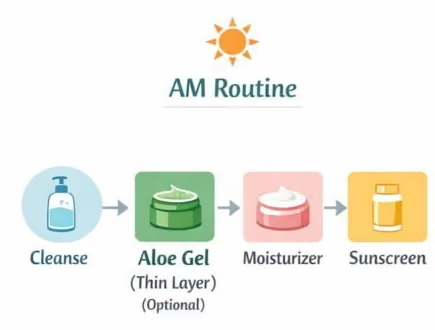
Use a small amount of a tolerated, leave-on facial aloe gel on clean skin, then continue with moisturiser and sunscreen. A thin layer is easier to fit under daytime products than a thick coating. The useful goal is comfortable skin and even sunscreen application, rather than adding as many layers as possible.
- Start with clean hands and a clean face. Follow your usual gentle cleansing routine.
- Check the product directions. Confirm that the gel is intended for facial, leave-on use. An aloe-containing cleanser or mask is a different product.
- Spread a thin layer. Use the labelled amount and keep it away from the eyes, lips and irritated or broken areas. Do not add another layer just because the first feels light.
- Follow with moisturiser if needed. Let the gel settle enough that the next layer spreads comfortably; there is no single mandatory waiting time for all formulas.
- Apply sunscreen according to its label. Do not mix aloe into sunscreen. Allow the sunscreen its directed time before sun exposure.
The American Academy of Dermatology's sunscreen guidance recommends broad-spectrum, water-resistant SPF 30 or higher and reapplication during outdoor exposure, including after swimming or sweating. Aloe gel does not replace this protection.
If aloe rolls up under sunscreen or makeup
Try a smaller amount, fewer layers and less rubbing. If the combination still forms flakes or rolls, leave aloe out of the morning routine rather than reducing the amount of sunscreen. This is a practical way to find a compatible routine; pilling alone does not identify an allergy or prove that either product is poor quality.
How to use aloe vera gel on your face at night
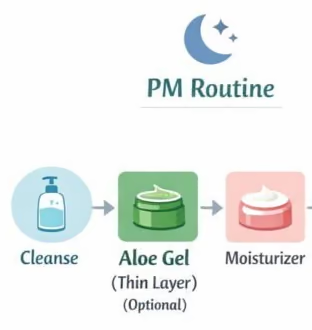
At night, remove the day's sunscreen and makeup before applying a leave-on aloe gel. You can follow it with your usual moisturiser if the combination suits you. Sleeping in an increasingly thick layer does not establish a better result.
- Cleanse properly. Use a cleanser suitable for the products you need to remove; an ordinary soothing gel is not automatically a cleansing product.
- Keep treatment directions first. Do not change the timing of acne medicines or other prescribed products to accommodate aloe.
- Apply a thin layer if you want this optional step. Use a product you have already tested and follow its facial-use directions.
- Finish with suitable moisturiser. If aloe leaves your face feeling tight or uncomfortable, omit it and reassess the formula.
Can you leave aloe vera gel on your face overnight?
A product labelled for leave-on facial use may stay on as directed if you tolerate it. A rinse-off mask should be removed as instructed. “Aloe vera” on the front of the pack does not tell you which type it is, and a first use is not the right time to test an unfamiliar product over your whole face overnight.
Aloe vera gel before or after moisturiser?
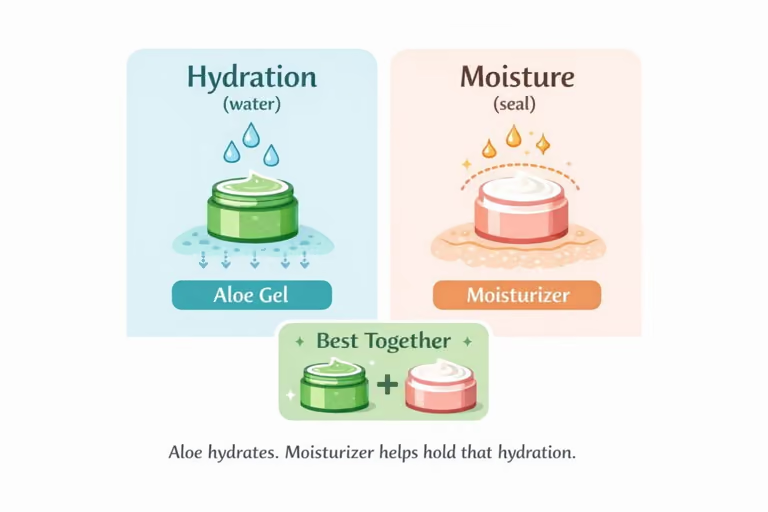
For a simple leave-on gel used as an extra hydrating step, aloe generally goes before a cream or lotion. Follow the individual labels if they specify a different order. If your moisturiser already contains aloe and meets your needs, adding a separate gel may offer little practical benefit.
Gel, cream and oil are different kinds of product, and their full formulas matter. Some gels are complete moisturisers; others are mainly a light layer that leaves dry skin wanting more. Judge the result by comfort rather than whether the front label says “natural” or “soothing”.
The AAD's general product-order guidance places treatment after cleansing, followed by moisturiser and/or sunscreen. It does not require an aloe step. For the separate role of facial oils, see our carrier oils for skin, face and massage guide.
Should you wash your face after applying aloe vera gel?
Wash off a rinse-off aloe product at its labelled time. A tolerated leave-on gel normally stays on until your next cleansing step. Rinse either type off promptly if it causes burning, itching or a rash.
| Product or situation | What to do |
|---|---|
| Leave-on facial gel | Use and leave on according to its directions; no universal timer is needed. |
| Rinse-off mask | Remove at the time on the label, even if the product contains aloe. |
| Unclear or missing directions | Ask the manufacturer before using it on your face overnight. |
| Burning, itching, redness or swelling | Wash it off gently and stop using it. |
How to wash aloe gel off without scrubbing
Use lukewarm water and your fingertips to loosen the gel, rinse gently, and pat dry with a soft towel. Follow any product-specific cleansing directions. Avoid abrasive scrubs or repeated washing to chase a completely “squeaky” feeling. If uncomfortable residue remains, use your usual gentle cleanser rather than rubbing harder.
What are the realistic benefits of aloe vera gel for the face?
A well-formulated gel may provide a light, comfortable layer and improve how dry-feeling skin feels. Whether it suits you depends on the whole formula and your skin's response. A cooling sensation, a temporary smoother look and improvement in a diagnosed skin condition are different outcomes.
NCCIH's review of aloe vera notes limited acne evidence from small studies using aloe alongside other treatments. That is not proof that a retail gel clears acne by itself. There is also no basis here for promising that every gel erases dark spots, removes scars or reverses wrinkles.
How long does aloe vera gel take to work?
Assess whether the product feels comfortable and fits your routine, rather than expecting a fixed “day one, week one, week four” transformation. The answer depends on the outcome being measured and the product used. Do not keep applying an irritating gel while waiting for a promised glow-up.
How should your skin type change the routine?
Oily or combination skin
If you choose aloe, begin with a thin layer and see whether it adds anything useful. More shine after application can simply mean the formula or amount does not suit your preference. You can use an optional product only where needed; your forehead and cheeks do not have to receive identical layers.
Dry-feeling skin
Prioritise a moisturiser that keeps your skin comfortable. A separate aloe gel is optional and may feel insufficient on its own. If a gel dries to a tight film, applying it more frequently is not necessarily the answer.
Sensitive or acne-prone skin
Choose products for your known tolerances and avoid unnecessary fragrance. For acne-prone skin, consider a finished product labelled non-comedogenic rather than assuming every aloe gel is suitable. If you have an active flare or a prescribed routine, ask your clinician before adding something new. Keep the number of simultaneous changes small so a reaction is easier to trace.
How to test a new aloe gel and recognise a reaction
Test the actual finished product before using it across your face. The AAD's home-testing method uses a small area such as the inner arm, twice daily for seven to ten days, with the normal amount. Keep rinse-off products on only as directed.
This check can help identify a reaction; it is not a diagnostic allergy test or a guarantee against later irritation. Avoid known allergens. NCCIH reports that topical aloe can occasionally cause burning, itching or rash. Stop and rinse if a reaction develops; seek medical advice if symptoms are severe or persist. Breathing difficulty or swelling of the lips or tongue needs urgent medical help.
How to choose and store an aloe gel
- Read the intended use: facial leave-on gel, mask, cleanser and after-sun lotion may have different directions.
- Check the complete formula: aloe percentage alone cannot tell you whether a product will suit your skin. Other moisturising ingredients and your known triggers matter too.
- Look for fragrance-free options if fragrance bothers you: a strong scent or a green colour does not prove purity or quality.
- Do not automatically reject preservatives: water-based cosmetics need effective protection against microbial contamination. “Preservative-free” is not, by itself, a safety advantage.
- Check the pack: readable directions, batch details, storage information, expiry or period-after-opening guidance, and a seller contact help you make an informed purchase.
- Keep it clean: close the lid, follow its storage label, and avoid adding water or home ingredients to the container.
The FDA explains how cosmetics can become contaminated, including through inadequate preservation or adding water.
A freshly cut leaf does not provide the same formulation, preservation or directions as a finished cosmetic. Aloe leaf gel and yellow latex are different materials. Avoid treating a homemade preparation as interchangeable with a product tested for facial use, especially on reactive skin. Cosmetic gel is for its labelled external use, not for drinking.
Frequently asked questions about aloe vera gel
Can I use aloe vera gel every day?
Follow the product's frequency instructions and your skin's tolerance. Daily use is optional, not a target you must reach. If it repeatedly leaves skin uncomfortable, stop rather than forcing it into your routine.
Can I use aloe vera gel as sunscreen?
No. Ordinary aloe gel does not provide verified broad-spectrum sun protection. Use a sunscreen with a labelled SPF and follow its directions. Do not dilute sunscreen by mixing it with gel.
Can aloe help after sun exposure?
The AAD's sunburn guidance includes a moisturiser containing aloe or soy for comfort. This does not make aloe a sunscreen. Avoid further sun exposure; extensive blistering or feeling unwell warrants medical advice.
Can I apply aloe after moisturiser?
Check both labels. A simple optional hydrating gel is generally easier to place before a cream or lotion. There is no need to add a second aloe layer on top if your routine already feels comfortable.
Can I mix aloe gel with lemon juice or essential oils?
A finished gel needs no DIY additions to be used as directed. Mixing ingredients changes the formula you tested and can introduce irritation or contamination. Keep products in their original containers and follow their individual directions.
Does aloe gel remove makeup?
Only use it for cleansing if it is formulated and labelled as a cleanser. A plain soothing gel should not be relied on to remove makeup or water-resistant sunscreen.
مختصر اردو رہنمائی
چہرے کے لیے ایلو ویرا جیل استعمال کرنے سے پہلے لیبل پڑھیں۔ جلد پر چھوڑنے والی جیل کی ہلکی تہہ صفائی کے بعد اور موئسچرائزر سے پہلے لگائی جا سکتی ہے، بشرطیکہ مصنوعات کی ہدایت مختلف نہ ہو۔ صبح سن اسکرین بھی استعمال کریں۔ دھونے والے ماسک کو لیبل پر درج وقت کے مطابق اتاریں۔ جلن، خارش یا سوجن ہو تو جیل دھو کر استعمال بند کر دیں۔ ہر جیل کو رات بھر لگانا یا بیس منٹ بعد دھونا ضروری نہیں۔
Sources and editorial scope
This adult skin-care guide is prepared by the SadaPure Editorial Team. It draws on the linked NCCIH, American Academy of Dermatology and FDA guidance. It is not a clinical trial of a SadaPure aloe product, and the sources have not reviewed or endorsed this article. For product information questions, contact SadaPure; persistent skin symptoms need advice from a qualified clinician.