
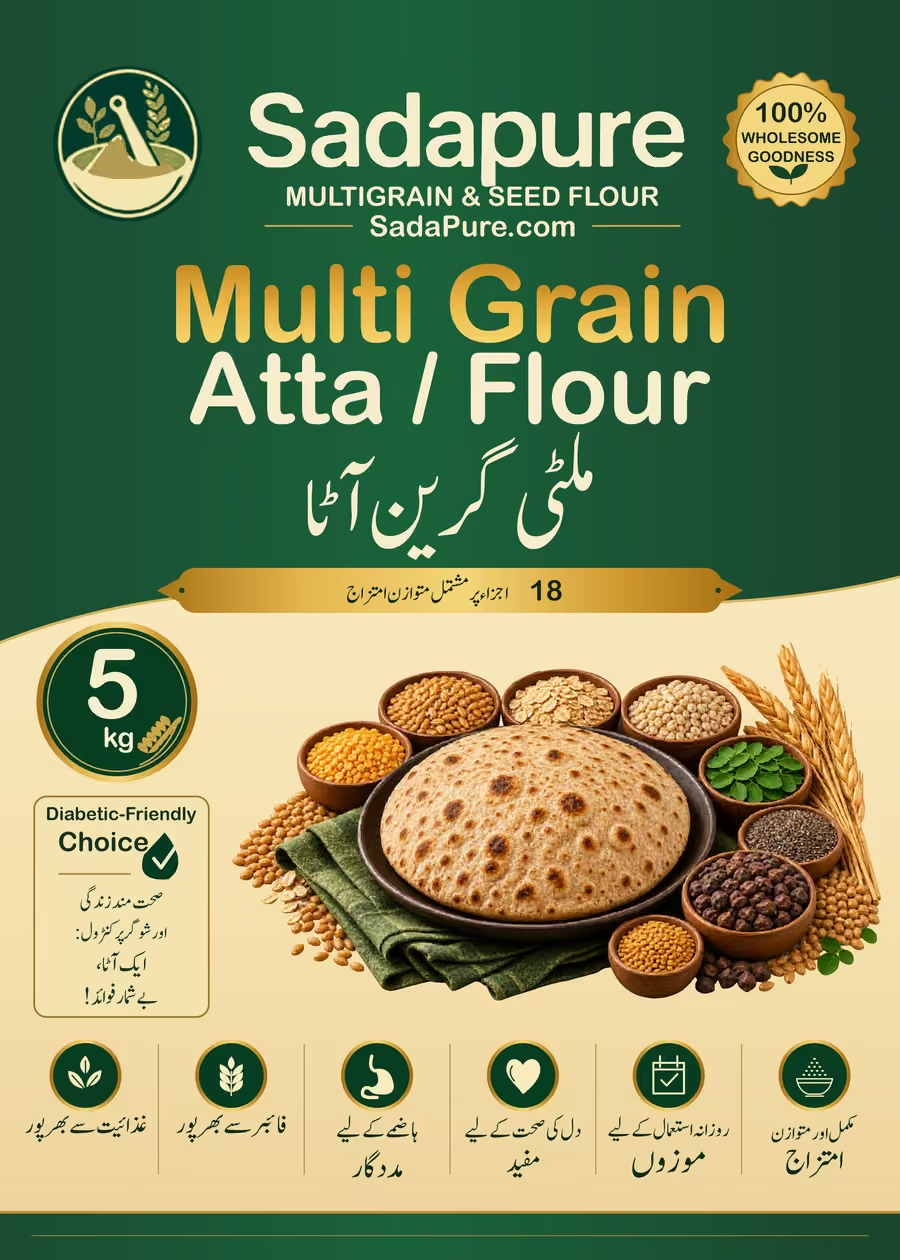
Multigrain Atta (ملٹی گرین آٹا) — 18 Whole Grains & Seeds, Stone-Ground

4.7 / 5(3 reviews)
  • 48% Whole Wheat, 52% Other Grains. This multigrain atta publishes the exact share of all 18 ingredients, not just the grain count printed on the front of the pack.
  • 18 Ajza Ek Hi Atte Mein: jau, jai, oat bran, kala chana, chana dal, moong, jowar, bajra, makki, til, alsi, chia, ispaghol aur rai.
  • Pathar Ki Chakki, Naturally Narm Roti: SadaPure Multigrain Atta ko riwayati pathar ki chakki par carefully grind aur blend kiya jata hai, taa-ke grains ki natural texture aur freshness barqarar rahe. Is se roti narm, khush-zaiqa aur ghar jaisi banti hai.
  • More Fibre Than Plain Whole Wheat Atta and zero maida. Nothing refined out, nothing added back, no soy, no ragi, no preservative, colour or added gluten.
  • Nearly a Quarter Is Soluble Fibre. Jau, jai, oat bran and ispaghol carry the beta glucan, in a working quantity rather than a token pinch.
  • Built for Everyday Roti, Chapati and Paratha. Same kneading, same tawa, with a little more water and a 15 minute rest so the roti stays soft.

SadaPure Multigrain Atta is a chakki ground flour blend of 18 grains, pulses and seeds on a 48% whole wheat base, made for everyday roti, chapati and paratha. It is the general purpose multigrain flour in our range, milled in small batches, batch coded on every pack, and sold at a flat PKR 500 per kilogram in 2.5 kg, 3.5 kg and 5 kg sizes.

Enough wheat to roll properly. Enough of everything else to be worth paying for.

Why is the wheat content 48% and not higher or lower?

48% is the point where this blend still made a roti that rolled, puffed and folded normally, while leaving just over half the bag for ingredients that are there for nutrition rather than for the label.

The reason there is a decision to make at all is gluten. Gluten is what holds a dough together, so a blend with too little wheat cannot be rolled thin without tearing, which is why many households try multigrain atta once, get cracking rotis, and go back to plain atta. Push the wheat share too high in the other direction and the remaining grains are decoration.

We settled at 48% after working through trial blends in our own mill. That is our formulation experience with this specific blend and not a universal rule. A different mill using different grain particle sizes and a different wheat variety will land somewhere else.

Is multigrain atta better than whole wheat atta?

Moderately, and it is worth being precise about how much rather than repeating the usual comparison to maida.

Whole wheat chakki atta is one grain milled with its bran and germ intact. It is already a good staple, it is cheaper per kilogram, and it needs no change to your kneading. Multigrain atta blends other grains, pulses and seeds into that same base, which widens the mineral range, raises plant protein a little, and shifts the fibre from mostly insoluble toward a much higher soluble share.

Typical whole wheat atta, per published food composition tables, sits near 340 kcal, 12 to 13 g protein and 10 to 11 g fibre per 100 g. Set against that, this blend calculates to about 373 kcal, 15.3 g protein and 12.4 g fibre. The gain is real but it is not a multiple, and any brand claiming double the protein of wheat atta should be asked for their formula, because the arithmetic does not permit it unless the bag is mostly pulses.

What does it taste like?

Wheat familiar, with a nutty finish from the til, jai and alsi and a faint savoury warmth from the zeera and methi dana. Not bitter and not heavy.

The colour runs a shade darker than plain atta because the bran and germ stay in the flour instead of being milled out and sold separately. Rotis hold their softness for hours when the dough has been rested properly, and most households need no adjustment period.

Who is this atta for?

Households who want wider grain and pulse variety without changing the daily roti routine, anyone moving off maida but unwilling to give up chapati, and anyone who would rather read a formula than a slogan before spending on a 5 kg bag.

It is not suitable for anyone with coeliac disease or gluten sensitivity, because it contains wheat, jau and rai. It is also unsuitable for anyone allergic to til, alsi, chia, methi dana or pulses, and for anyone needing a certified gluten free or wheat free flour. The full allergen declaration is on this page.

How is it milled and delivered?

Ground on a chakki in small batches rather than run through high speed roller mills, sealed, and batch coded so every pack traces back to its mill run and date.

Cash on Delivery nationwide to Lahore, Karachi, Islamabad, Rawalpindi, Faisalabad, Multan, Gujranwala, Sialkot, Hyderabad, Peshawar, Quetta and every courier serviceable town between, usually within two to five working days.

Food first

Classical Unani writing on Ilaj bil Ghiza, treatment through food, placed the quality of everyday ghiza and the ease of its hazm ahead of everything else. Modern nutrition science approaches the subject differently and lands close to the same place: what you eat daily matters more than what you take occasionally.

Roti is the one food most households never skip. That is the entire argument for building a better one, and it is the only tradition claim made on this page.

یہ آٹا چکی پر تھوڑی تھوڑی مقدار میں پیسا جاتا ہے اور ہر پیک پر بیچ کوڈ درج ہوتا ہے۔ گوندھنے، بیلنے اور روٹی پھولنے کا طریقہ عام آٹے جیسا ہی رہتا ہے، بس آٹے کو ڈھک کر کچھ دیر رکھنا ضروری ہے۔

SadaPure Multigrain Atta contains 18 ingredients, of which whole wheat is 48% and the remaining 52% is other grains, pulses and seeds. This multigrain flour publishes the exact share of every ingredient below, along with its weight in a 2.5 kg and a 5 kg pack.

A grain count tells you how many. A percentage tells you how much.

What grains are used in multigrain atta?

A typical multigrain atta sold in Pakistan is built on wheat with four to eight additions, usually jau (barley), jai (oats), jowar (sorghum), bajra (millet), makki (corn) and one pulse. Cheaper blends stay at the low end of that range because those grains are locally milled and inexpensive.

This blend uses eighteen: eight cereals, three pulses, three seeds, ispaghol (psyllium husk), and three aromatics and leaf. The complete list follows.

What is the full ingredient list with percentages?

Whole wheat 48%, jau 10%, jai 8%, kala chana 6%, oat bran 4%, chana dal besan 4%, moong or lentil 3%, jowar 3%, bajra 3%, til 3%, alsi 2.5%, makki 1.5%, ispaghol 1.5%, rai 1%, chia 0.5%, zeera 0.4%, methi dana 0.3% and moringa leaf 0.3%. The table below adds the weight of each ingredient in a 2.5 kg and a 5 kg pack.

Ingredientاردو نامShareIn 2.5 kgIn 5 kg
Whole Wheat Flourسالم گندم کا آٹا48%1,200 g2,400 g
Barley Flour (Jau)جَو کا آٹا10%250 g500 g
Oat Flour (Jai)جئی کا آٹا8%200 g400 g
Whole Kala Chana Flourثابت کالے چنے کا آٹا6%150 g300 g
Oat Branجئی کا چھلکا4%100 g200 g
Chana Dal Besanچنے کی دال کا بیسن4%100 g200 g
Moong / Lentil Flourمونگ / دال کا آٹا3%75 g150 g
Sorghum Flour (Jowar)جوار کا آٹا3%75 g150 g
Millet Flour (Bajra)باجرے کا آٹا3%75 g150 g
Sesame Seeds (Til)تل3%75 g150 g
Flaxseed Meal (Alsi)پسی ہوئی السی2.5%62.5 g125 g
Whole Corn Flour (Makki)مکئی کا آٹا1.5%37.5 g75 g
Psyllium Husk (Ispaghol)اسپغول کا چھلکا1.5%37.5 g75 g
Rye Flour (Rai)رائی کا آٹا1%25 g50 g
Chia Seedsچیا بیج0.5%12.5 g25 g
Cumin Seeds (Zeera)زیرہ0.4%10 g20 g
Fenugreek Seeds (Methi Dana)میتھی دانہ0.3%7.5 g15 g
Moringa Leaf Powderسہانجنا کے پتوں کا پاؤڈر0.3%7.5 g15 g
Total100%2,500 g5,000 g

Why do so few brands publish ingredient percentages?

Because a grain count costs the miller nothing and a grain percentage costs real money. A bag can accurately claim twelve grains while being ninety percent ordinary wheat, since wheat is the cheapest ingredient in any atta and every addition raises the cost per kilogram.

That is why "16 grain" and "9 grain" appear on packs across Pakistan while the proportions almost never do. The count is the marketing. The proportion is the product.

How is the formula structured?

The eighteen ingredients fall into six functional blocks: structure 48%, soluble fibre 23.5%, pulse protein 13%, millets and minor cereals 8.5%, seeds 6%, and aromatics and leaf 1%. Each block carries a different load, each carrying a different load in the flour.

BlockShareMade up of
Structure48%Whole wheat, the gluten that lets dough roll and puff
Soluble fibre23.5%Jau, jai, oat bran, ispaghol
Pulse protein13%Kala chana, chana dal besan, moong or lentil
Millets and minor cereals8.5%Jowar, bajra, makki, rai
Seeds6%Til, alsi, chia
Aromatics and leaf1%Zeera, methi dana, moringa

What do the trace ingredients actually do?

Zeera, methi dana and moringa together make up one percent of the blend and their job is flavour and a small amount of mineral density, nothing more.

Cumin and fenugreek are everyday staples of the desi kitchen and appear here at seasoning scale, shaping the savoury note in the finished roti. Moringa leaf is a concentrated leaf powder included at 0.3%. We would rather say that plainly than let a trace ingredient carry a claim it cannot support.

What is not in this atta?

No maida, no soy, no ragi, and no bran separated out and mixed back in later. No preservative, colour, anti caking agent, artificial flavour, dough conditioner, bleaching agent or added gluten.

The eighteen ingredients listed above are the complete list. There is no "and other permitted ingredients" line, because there is nothing else.

سدا پیور ملٹی گرین آٹے میں اٹھارہ اجزاء ہیں اور سالم گندم اڑتالیس فیصد ہے۔ ہر جزو کا صحیح تناسب اور ہر پیک میں اس کا وزن اوپر درج ہے۔ اس میں میدہ، سویا، راگی یا کوئی کیمیکل شامل نہیں۔


The measurable differences in this blend are a higher soluble fibre share, a better balanced protein profile from 13% pulses, and a wider mineral range from millets and seeds. Every point below is tied to a named ingredient and a stated percentage. Nothing here is a study result about this product and nothing here is a medical claim.

The fibre changes type before it changes quantity, and the type is the part that matters.

What are the benefits of multigrain atta over plain wheat atta?

The main differences are the type of fibre, the completeness of the protein, and the spread of minerals.

Plain atta delivers mostly insoluble fibre from wheat bran, which adds bulk and passes through largely intact. In this blend, 23.5% of the bag is jau, jai, oat bran and ispaghol, which carry soluble fibre. Soluble fibre behaves differently: it absorbs water and forms a viscous gel rather than adding bulk. That is a working quantity rather than a decorative one, and it is the single most deliberate decision in the formula.

Why does adding daal to atta improve the protein?

Because cereal protein and pulse protein are limiting in different amino acids, so combining them in one food gives a better overall balance than either provides alone.

Wheat protein is relatively low in lysine. Pulse protein is richer in lysine and lower in the sulphur amino acids. This principle is set out in FAO and WHO work on protein quality and has been practised in South Asian kitchens for centuries as daal with roti. Thirteen percent of this blend is kala chana, chana dal besan and moong or lentil flour, so the combination is already inside the atta and works on the days the daal does not get made.

Which minerals do the millets and seeds add?

Bajra and jowar are reported in composition tables as carrying more iron and magnesium than wheat, til is among the densest plant sources of calcium, and alsi and chia contribute alpha linolenic acid, a plant source omega 3.

Individually these are small additions, and the exact amounts are visible in the ingredient by ingredient calculation on this page. Eaten twice a day, every day, in the one food nobody skips, small additions are the only kind that accumulate.

Does multigrain atta keep you full for longer?

Soluble fibre, protein and fat each influence how satisfying a meal feels in the research literature, and this blend raises all three relative to plain atta.

Whether that changes how much your household actually eats is individual, and we have not surveyed our customers on it. We would rather say that than repeat a satiety number we cannot stand behind.

Is multigrain atta good for weight loss?

No flour causes weight loss, and this one is not lower in calories than ordinary atta. At approximately 373 kcal per 100 g it is marginally higher, because six percent of the blend is seed.

Weight change follows total energy intake over time and nothing else. What a higher fibre, higher protein roti can do is make a given portion more satisfying, which for some people makes a smaller portion easier to keep to. Replacing refined flour food with whole grain food while holding your roti count steady is a real and sustainable change, but the flour cannot do the portion part for you.

Any brand telling you their atta burns fat is selling something that does not exist. Ask them for the calorie count per 100 g and watch what happens.

Which ingredients are actually doing the work?

Three blocks do most of the work: the 23.5% soluble fibre group, the 13% pulse group and the 6% seed group. The rest of the formula contributes structure, minerals and flavour.

  • Jau, jai, oat bran and ispaghol, 23.5% combined. The soluble fibre block, and the largest non wheat group in the bag. Ispaghol is only 1.5% of that but has the highest fibre density of any single ingredient here, and it is why the dough holds water so well.
  • Three pulses, 13% combined. Protein and resistant starch together.
  • Til, alsi and chia, 6% combined. Fat, which slows the digestion of the whole meal.

What does the wider research actually say?

Population studies consistently associate higher whole grain and soluble fibre intake with better cardiovascular and digestive outcomes, and beta glucan from oats and barley is among the most studied soluble fibres in that literature.

That is a statement about a category of ingredients, not a promise about this product. We are a flour mill and not a clinical trial, and we will not blur the two.

What does this atta not do?

It does not treat any medical condition, cause weight loss on its own, or replace medical advice. Every claim in the list below appears somewhere on a multigrain atta page, and none of them is made here.

  • It does not treat, manage or cure diabetes
  • It does not burn fat or cause weight loss on its own
  • It does not cure PCOS, hair fall or any skin condition
  • It does not prevent heart disease, cancer or stroke
  • It does not boost immunity
  • It is not a substitute for medication, a diet plan or medical advice

It is a better built everyday flour with a published formula. That is the whole claim, and it is the only one we will defend.

Two comparisons decide a multigrain atta purchase: how it differs from the flours already in your kitchen, and how one multigrain bag differs from another. Both are set out below, including the rows where SadaPure does not come out ahead.

Multigrain atta vs whole wheat atta vs maida: what is the difference?

Maida is refined wheat with the germ and bran removed. Chakki atta is whole wheat with both retained. Multigrain atta is whole wheat blended with other grains, pulses and seeds, which widens the nutrient range and raises the fibre. The table sets the four side by side.

FlourGrainsGerm and branFibre levelRoti character
MaidaWheat onlyRemovedVery lowVery soft, very low nutrition
Chakki attaWheat onlyRetainedModerate, around 10 to 11 g per 100 g in published composition tablesFamiliar, easy to handle
"Brown" or high fibre attaWheat onlyOften removed, then partly added backModerateSlightly coarse
Multigrain attaMultiple grains, pulses, seedsRetainedHigher, around 12.4 g per 100 g in this blendNutty, needs more water and a rest

One warning worth carrying into any aisle. A lot of what is sold as "brown" or "high fibre" atta is refined flour with a fraction of the bran mixed back in afterwards. The germ, which carries most of the vitamin E and the natural oils, was removed and sold separately, and it does not come back.

And a fair word for plain chakki atta: it is a perfectly good staple and always has been. Multigrain is a step up in fibre type and grain variety, not a rescue from something bad.

How does SadaPure compare with other multigrain brands?

On ingredient count SadaPure lists 18 against 14 for ChiltanPure and 9 each for Virsa and Phulka, and it is the only one of the four publishing the percentage of each ingredient. On published nutrition panels and lab testing it is behind two of them, and those rows are flagged below the table.

Checked September 2026. Everything in this table is taken from each brand's own published product page on that date. "Not stated" means the information was not found on the page we checked, which is not the same as the brand lacking that quality. Formulas and product pages change without notice, so verify on each brand's own page before deciding.

What mattersSadaPureChiltanPureVirsaPhulka
Ingredients listed181499
Exact percentage of every ingredientPublishedNot statedNot statedNot stated
Whole wheat percentage48%Not statedNot statedNot stated
Non wheat portion quantified52%Not statedNot statedNot stated
Pulses or daal3 types3 types1 listed1 listed
OatsYesNot in the listed 14YesYes
Oat bran, listed separatelyYesNot listedNot listedNot listed
IspagholYesYesNot listedNot listed
TilYesNot listedNot listedNot listed
ChiaYesNot listedNot listedNot listed
RaiYesNot listedNot listedNot listed
AlsiYesYesYesYes
MoringaYesYesYesYes
Jowar and bajraYesYesYesYes
MakkiYesYesYesNot listed
Zero maida statedYesNot statedNot statedYes
Chakki ground statedYesNot statedYesMilling stated, method not
Batch code on packYesNot statedNot statedNot stated
Nutrition panel publishedCalculated, not lab testedNot statedNot statedYes
Lab tested claimNone madeNot statedYesNot stated
Allergen declaration publishedYesNot statedNot statedYes

Where SadaPure does not come out ahead

Two rows go against us and they are worth pointing at directly. Phulka publishes a nutrition panel while ours is calculated rather than laboratory measured. Virsa publishes a lab tested claim and we make none, because we have not commissioned the testing.

Those are real gaps and you should see them here rather than discover them later. What the table does show is that on the one question which decides value, how much of the bag is actually multigrain, SadaPure is the only column with a number in it.

How do you compare multigrain atta prices properly?

Compare per kilogram rather than per bag, and divide that figure by the published non wheat percentage. Three rules follow from that, and they apply to every brand on the shelf including this one.

  1. Compare per kilogram, not per bag. Pack sizes vary enough to hide a genuine price difference.
  2. Divide the price by the non wheat percentage. If a brand does not publish that percentage you cannot run the calculation, and that is itself the answer.
  3. Check what is declared, not what is counted. "Contains 12 grains" and "contains 12 grains in these proportions" are very different products at the same shelf price.

Based on our own survey of Pakistani brand and retailer listings in September 2026, multigrain atta ranges from roughly PKR 250 to PKR 800 per kilogram, and that spread mostly reflects how much of each bag is ordinary wheat. A cheap bag that is ninety two percent wheat is not cheap multigrain atta. Measured per kilogram of actual multigrain content, it is usually the most expensive thing in the aisle.

Which pack size should you buy?

A family of four to five wants the 5 kg pack, a three person household the 3.5 kg, and one or two people the 2.5 kg. All three cost the same per kilogram, so buy for how fast your kitchen gets through it.

PackSuitsRoughly lasts
2.5 kgOne or two people, or a first trial2 to 3 weeks
3.5 kgA three person householdAbout a week
5 kgA family of four to fiveAbout ten days

The per kilogram price is identical across all three sizes, which is unusual and deliberate. Most brands discount the largest bag to push you toward it. This blend contains til, alsi and chia, and ground seed oils lose their flavour faster than starch does, so a 5 kg bag bought by a two person household goes flat before it is finished. A flat price removes the reason to over buy.

How is it delivered, and can you return it?

Cash on Delivery nationwide, so you pay when the pack is in your hand, and there is a 3 day return and refund policy on the order.

Guest checkout is enabled, so no account is needed to order. Delivery is typically two to five working days depending on your city, order confirmations are sent by WhatsApp, and orders can be tracked on the site.

Order valueDelivery charge
Under PKR 4,000PKR 250
PKR 4,000 and aboveFree

The final charge is always shown at checkout before you confirm, and nothing is added afterwards.

What the return policy covers, in practice

If a pack arrives damaged, leaking, wrong, or clearly off, send us the batch code and a photo and we will replace or refund it. We would rather replace a bag than argue about it.

What we cannot take back is an opened, part used pack that simply was not to your taste. That is exactly why the 2.5 kg pack exists at the same price per kilogram as the 5 kg, so a first trial costs a third of a full family bag rather than the whole of one.

Do you sell in bulk or to businesses?

Yes, and because we mill in small batches, custom grain ratios are genuinely possible at volume.

More jai, no til, a higher pulse share, or a different wheat percentage entirely are all workable if the quantity justifies a dedicated run. Tell us what you want changed and we will say honestly whether the result will still make a roti that holds together.

Which SadaPure blend should you choose?

This 18 ingredient blend is the general purpose one: everyday roti for the whole household, with no particular weighting.

We also mill blends weighted differently, including Diabetes Support, PCOS Support, Hair and Skin, and Men's Stamina. Each publishes its own full ingredient list on its own page, so you can set two formulas side by side rather than trusting the name on the front.

None of those blends treats or manages any medical condition. The names describe how the grain ratios are weighted, not a medical effect. If you are managing a health condition, choose with your doctor or dietitian rather than from a product name.

Multigrain atta needs about ten to fifteen percent more water than plain atta and a covered rest of 15 to 20 minutes before rolling. With that one adjustment it works for every multigrain atta recipe a Pakistani kitchen makes: roti, chapati, paratha, puri, halwa puri, cheela, naan and baking.

Everything else about your routine stays the same. The reason is the ispaghol, oat bran, alsi and chia, which keep drawing in moisture for several minutes after kneading.

More water than you expect, and a longer rest than you want to give it.

How do you make soft multigrain roti?

Add water in stages until the dough is smooth and slightly tacky, rest it covered for 15 to 20 minutes, then roll evenly and cook on a medium tawa. The six steps below give the detail.

  1. Allow roughly 40 g of flour per medium roti. Salt is optional and does not affect texture.
  2. Add water in stages, not all at once, because pouring it in together leaves dry pockets that never fully hydrate.
  3. Knead until the dough is smooth and slightly tacky, not firm. If it feels firm and satisfying at this point, it is too dry.
  4. Cover with a damp cloth and rest 15 to 20 minutes. This is the step most people skip and the reason most first attempts disappoint.
  5. Roll to an even thickness edge to edge and cook on a properly heated tawa at medium.
  6. Flip when bubbles appear, press lightly with a cloth, then stack in a cloth lined casserole so the trapped steam keeps them soft for hours.

Why is my multigrain roti hard or cracking?

Cracking almost always means the dough was too dry, and hardness almost always means it was under rested or the tawa was too hot. The four common problems and their fixes are below.

What you seeWhy, and what to do
Edges crack while rollingDough too dry. Wet your hands, knead 30 seconds more, rest another five minutes. Do not dust with dry flour, it makes it worse.
Roti came out hardUnder rested dough, or too hot a tawa. Use medium heat, because high heat sets the surface before steam can build inside.
Roti will not puffUneven rolling, nearly always. Also check the tawa was properly pre heated, because a cold start puffs nothing.
Dough feels stickyRest it uncovered five minutes and knead again. Do not add dry flour immediately, because this dough loosens as it hydrates and firms back up on its own.

Whole grain flour, bran and seed meal all take up water at their own pace, so judging the dough by feel will get you further than following a fixed water measurement.

Can you make paratha with multigrain atta?

Yes, and multigrain paratha is one of the recipes this blend suits best. Knead slightly firmer than roti dough and rest a little longer, because the extra firmness gives cleaner layers.

Keep to three folds at most, since the seed content in this blend makes over worked layers tear. Ghee between the folds helps them separate.

Can you make puri and halwa puri with it?

Yes, but fry at medium heat rather than high.

Whole grains need time to cook through, and hot oil browns the outside while the inside stays raw. Expect a slightly darker colour and a less dramatic puff than a maida puri gives you.

What is the easiest way to introduce it to a fussy household?

Cheela. Make the batter thinner than you would with besan, rest it ten minutes, then check and loosen it again, because it thickens noticeably as it stands.

The 13% pulse content in this blend works in your favour here in a way it does not in plain atta, and cheela avoids the roti texture comparison entirely. A half and half blend with your usual atta for the first week is the other reliable route.

Can you use it for sehri during Ramadan?

Yes, and there is a practical trick that suits this blend particularly well. Knead the dough the night before and refrigerate it.

The long cold rest lets the seed meals and ispaghol finish hydrating overnight, so at sehri there is nothing left to do but roll.

Can you use multigrain atta for naan, kulcha and baking?

Yes, but start by replacing 20 to 30 percent of your usual flour rather than making a full swap.

Add extra water and extend the first proof, because bran physically interferes with gluten development and the dough needs longer. Increase the ratio gradually once you know how your oven behaves. Many home bakers settle around fifty percent.

How much atta does a household need per month?

At 40 g of flour per medium roti, a household of four eating three rotis each gets through about 480 g a day, roughly 3.4 kg a week and 14 to 15 kg a month.

That calculation is the most useful one for choosing a pack size, because it tells you how long a bag will last rather than how much it costs.

نرم روٹی کے لیے پانی تھوڑا تھوڑا ڈالیں، آٹا نرم گوندھیں اور بیلنے سے پہلے پندرہ سے بیس منٹ ڈھک کر رکھیں۔ یہی وہ مرحلہ ہے جو زیادہ تر لوگ چھوڑ دیتے ہیں۔

This atta contains gluten from wheat, jau and rai, plus til, pulses, alsi, chia, methi dana and jai. It is not gluten free and not suitable for coeliac disease. Read this section before ordering if anyone in your household has a food allergy, an intolerance, or a medically restricted diet.

CONTAINS: WHEAT, BARLEY AND RYE (GLUTEN) · SESAME · PULSES · FLAXSEED, CHIA, FENUGREEK · OATS

What allergens does this multigrain atta contain?

Gluten from wheat, jau and rai. Sesame from til. Legumes from kala chana, chana dal besan and moong or lentil flour. Plus alsi, chia, methi dana, zeera and jai. Exact percentages are in the table.

AllergenWhere it comes from in this blend
GlutenWhole wheat 48%, jau 10%, rai 1%
SesameTil 3%, a major declared allergen in most labelling regimes
Pulses and legumesKala chana 6%, chana dal besan 4%, moong or lentil flour 3%
Other seedsAlsi 2.5%, chia 0.5%, methi dana 0.3%, zeera 0.4%
OatsJai 8% and oat bran 4%, not gluten free certified

Free from by formulation: soy, peanut, tree nuts, dairy, egg, ragi and maida.

Cross contact: milled and packed on equipment also used for other grains, pulses and seed products. If an allergy in your household is severe, contact us before ordering and we will tell you exactly what runs on the line before your batch.

Who should not eat this atta?

Anyone with coeliac disease, a wheat allergy, or an allergy to sesame, legumes, flaxseed, chia or fenugreek, and anyone who needs a certified gluten free flour.

  • Anyone with coeliac disease, non coeliac gluten sensitivity, or medically advised to avoid gluten
  • Anyone with a diagnosed wheat allergy
  • Anyone with a chickpea, lentil or legume allergy
  • Anyone with a sesame, flaxseed, chia or fenugreek allergy
  • Anyone needing a certified gluten free or wheat free flour

Our jai is not gluten free certified, and oats are subject to gluten cross contact during growing, transport and processing regardless of what they are blended with afterwards.

Is there a wheat free multigrain atta?

Not in our range, and a wheat free blend will not behave like conventional atta without being reformulated around a different binding system.

Without gluten there is nothing to bind the dough. Gluten free flatbreads are certainly possible, but they need specific binders and a different technique, not a straight substitution. Flours sold as "wheat free atta" are usually single grain: jowar, bajra, ragi or makki, which make an excellent but different, hand patted roti. If you need wheat free for medical reasons, buy a certified product rather than hoping a multigrain blend will work.

Are there any side effects of eating multigrain atta?

For most people there are none, because this is food rather than a supplement. What sometimes happens is a short adjustment period.

A sudden shift from a low fibre diet to a higher fibre one can cause bloating or wind for the first week or two. That is a normal response to more fibre and not a fault in the flour. Two things help: blend half this atta with your usual atta for the first week and go to full afterwards, and drink more water, because soluble fibre works by absorbing water and a low fluid intake makes the adjustment harder than it needs to be.

Beyond that, the genuine cautions are the allergens listed above. If you are allergic to any ingredient in the formula, this flour is not for you, and no amount of gradual introduction changes that.

Can children and pregnant women eat it?

For children who already eat ordinary family food, this is ordinary family food. For children under two, or any child with a diagnosed allergy or digestive condition, ask your paediatrician first.

During pregnancy, and for anyone managing a diagnosed condition of any kind, the useful thing we can give you is the complete formula with every percentage, which is published on this page. Whether it suits you is a question for your own doctor or dietitian, not a product page.

If an allergic reaction is suspected after eating, stop and seek medical attention. Difficulty breathing, severe swelling or faintness needs urgent medical care.

اس آٹے میں گندم، جَو اور رائی کی وجہ سے گلوٹن موجود ہے، اور تل، السی، چیا، میتھی، چنا اور دال بھی شامل ہیں۔ یہ گلوٹن فری آٹا نہیں ہے۔ سیلیک مرض یا ان اجزاء سے الرجی کی صورت میں استعمال نہ کریں۔

SadaPure Multigrain Atta calculates to approximately 373 kcal, 15.3 g protein, 67.4 g carbohydrate, 12.4 g dietary fibre and 6.1 g fat per 100 g of dry flour. These figures are calculated from the published 18 ingredient formula using standard composition values, not measured in a laboratory, and the full working is shown below so the arithmetic can be checked.

Every number below is shown with its working, ingredient by ingredient.

What are the nutrition facts per 100g?

Per 100 g of dry flour: 373 kcal, 15.3 g protein, 67.4 g carbohydrate of which 12.4 g is dietary fibre, 6.1 g fat, 1.8 g sugars and 0 mg cholesterol. Minerals and the per roti column follow.

NutritionPer 100 gPer 40 g (one medium roti)
Energy≈ 373 kcal / 1,560 kJ≈ 149 kcal / 624 kJ
Protein≈ 15.3 g≈ 6.1 g
Total Carbohydrate≈ 67.4 g≈ 27.0 g
Dietary Fibre≈ 12.4 g≈ 5.0 g
Total Sugars≈ 1.8 g≈ 0.7 g
Total Fat≈ 6.1 g≈ 2.5 g
Saturated Fat≈ 0.8 g≈ 0.3 g
Cholesterol0 mg0 mg
Sodium≈ 10 mg≈ 4 mg
Potassium≈ 467 mg≈ 187 mg
Calcium≈ 90 mg≈ 36 mg
Iron≈ 4.9 mg≈ 2.0 mg
Magnesium≈ 147 mg≈ 59 mg
Zinc≈ 3.0 mg≈ 1.2 mg

No salt is added at any stage. The sodium figure is what the grains and seeds carry naturally.

How much fibre and protein is in two rotis?

Two rotis made from this blend carry roughly 10 g of dietary fibre and 12 g of plant protein, at about 298 kcal.

For most adults that fibre figure is close to a third of a full day's target, from one part of one meal, before anything else on the plate is counted. That arithmetic is more useful for meal planning than any single figure on a nutrition panel.

How were these figures calculated?

By weighting each of the eighteen ingredients by its exact share of the blend and summing the results, which is set out line by line below so you can check it. Each ingredient's contribution was weighted by its exact share of the blend and then summed. The column totals below are the headline figures in the table above, so the calculation can be verified line by line.

IngredientIn 100 gEnergyProteinCarbsFibreFat
Whole Wheat Flour48 g177.6 kcal7.25 g34.18 g5.09 g1.31 g
Barley Flour10 g34.5 kcal1.05 g7.45 g1.01 g0.16 g
Oat Flour8 g32.0 kcal1.40 g5.20 g0.80 g0.60 g
Whole Kala Chana Flour6 g22.7 kcal1.23 g3.78 g0.73 g0.36 g
Oat Bran4 g9.8 kcal0.69 g2.65 g0.62 g0.28 g
Chana Dal Besan4 g15.5 kcal0.90 g2.31 g0.43 g0.27 g
Moong Flour3 g10.4 kcal0.72 g1.88 g0.49 g0.03 g
Jowar Flour3 g10.8 kcal0.25 g2.30 g0.20 g0.10 g
Bajra Flour3 g11.5 kcal0.32 g2.25 g0.10 g0.13 g
Sesame Seeds3 g17.2 kcal0.53 g0.70 g0.35 g1.49 g
Flaxseed Meal2.5 g13.4 kcal0.46 g0.72 g0.68 g1.05 g
Whole Corn Flour1.5 g5.4 kcal0.10 g1.15 g0.11 g0.06 g
Psyllium Husk1.5 g3.0 kcal0.04 g1.35 g1.33 g0.01 g
Rye Flour1 g3.6 kcal0.08 g0.77 g0.14 g0.02 g
Chia Seeds0.5 g2.4 kcal0.08 g0.21 g0.17 g0.15 g
Cumin Seeds0.4 g1.5 kcal0.07 g0.18 g0.04 g0.09 g
Fenugreek Seeds0.3 g1.0 kcal0.07 g0.18 g0.07 g0.02 g
Moringa Leaf Powder0.3 g0.6 kcal0.08 g0.11 g0.06 g0.01 g
Total100 g≈ 373 kcal≈ 15.3 g≈ 67.4 g≈ 12.4 g≈ 6.1 g

Two things stand out reading down the fibre column. Ispaghol contributes 1.33 g of fibre from a 1.5 g inclusion, more per gram than anything else in the bag. And whole wheat, at 48% of the blend, still supplies less than half the total fibre, because the other seventeen ingredients are collectively denser in it.

Are these figures laboratory tested?

No. They are calculated from the formula, and we state that rather than presenting a calculation as a measurement.

Batch to batch variation of roughly five to eight percent is normal for any chakki ground whole grain flour, because growing conditions, grain variety and milling all move the real values. A third party laboratory panel is planned and will replace these figures on this page when it exists.

Store multigrain atta in an airtight container in a cool, dry place away from the stove, and use it within six to eight weeks of opening for the best flavour. It needs more care than plain atta because six percent of this blend is seed.

Buy what your kitchen will finish, not what the bag offers.

Why does multigrain atta go stale faster than plain atta?

Because of the seed fraction, not the grains.

Plain wheat atta is mostly starch, and starch is comparatively stable in storage. Ground til, alsi and chia contain unsaturated oils that become more susceptible to oxidation once the seed coat is broken, and flaxseed oil is classed in food science literature as one of the more oxidation prone edible oils, because of its high polyunsaturated content.

Oxidation is what produces the flat, faintly bitter taste people describe in old multigrain atta. Heat, light and humidity all accelerate it, which means where you keep the bag matters more than how long you have had it.

What are the rules for storing it properly?

Airtight container, away from the stove, never a wet scoop, sealed immediately after use, and not stored beside strong smelling foods. Each rule and the reason behind it is below.

  • Airtight, every time. A folded over bag is not airtight, and oxygen is the whole problem.
  • Away from the stove. The cabinet above the cooker is the warmest spot in any kitchen, and it is where most households keep atta.
  • Never a wet scoop. One damp spoon introduces enough moisture for mould in Karachi or Lahore humidity.
  • Close it immediately. Take out what you need and seal the rest before you start kneading, not after.
  • Not beside strong smelling foods. Flour picks up aroma readily, and so do the seed oils in it.

Can you keep multigrain atta in the fridge?

Yes, and in very hot weather it extends the freshness window considerably.

Keep the container sealed so the flour does not pick up fridge odours, and bring it back to room temperature before kneading so the dough hydrates evenly.

How do you know if atta has gone bad?

A flat, waxy or faintly paint like smell is the earliest sign, followed by a bitter finish on the tongue. Clumping that will not break with a fork means moisture, and any mould or insect activity means the whole container goes.

SignWhat it means
SmellFresh is nutty and faintly grassy. Flat, waxy or faintly paint like indicates oxidised flax.
TasteA persistent bitter finish at the back of the tongue.
TextureClumping that will not break apart with a fork means moisture has got in. Discard it.
Mould or insectsDiscard the whole container, not just the visible portion. Do not sieve and salvage.

What is the batch code on the pack for?

It ties your specific bag to the mill run it came from and the date it was ground.

Send us that code and we can tell you exactly when your flour was milled and what else ran on the line before it. We mill in small batches specifically so a code means something, because a code covering a forty tonne run tells you nothing at all.

01Does it taste very different from regular wheat atta?

The taste stays familiar enough for everyday roti, with a mild nutty, whole-grain finish from the oats, flaxseed and chia. It is not bitter and not heavy. The colour is a shade darker than plain atta because the germ and bran are still in the flour rather than being milled out. Most households do not need a transition period — the roti routine stays the same.

02Is this multigrain atta gluten-free?

No. It contains wheat, rye, barley and spelt, all of which contain gluten. It is not suitable for people with celiac disease or anyone who has been medically advised to avoid gluten. There is no gluten-free version of this blend, because the wheat gluten is what allows the roti to hold together and puff.

03Why does Multigrain atta cost more than ordinary wheat atta?

Almost half of this blend is made from ingredients other than wheat — oats, rye, barley, spelt, brown rice, corn, millet, sorghum, quinoa, amaranth, teff, flaxseed and chia. Every one of those costs several times more per kilogram than wheat. It is also stone-ground in small batches rather than mass-milled, and batch-coded. The price works out to PKR 500 per kilogram in all three pack sizes, with no size penalty.

04How should I store the Multigrain flour after opening?

Transfer it to a clean, airtight food-grade container and keep it in a cool, dry place away from direct sunlight and away from the stove. This blend contains flaxseed and chia meal, and those natural seed oils are live, so heat and humidity shorten the freshness window more than they would for plain wheat atta. Buy the pack size your household will actually finish rather than defaulting to the largest one.

05Can someone with diabetes eat this multigrain flour?

"Multigrain" does not automatically mean it will suit a diabetic meal plan. It is high in dietary fibre and made from whole grains rather than refined flour, which digests more gradually than maida, but portion size matters more than the label. If blood sugar is the specific reason you are shopping, our separate Diabetes Support Multigrain Atta is a 15-ingredient formula weighted for that purpose, and its full formula is published on its own page. Please plan portions with your doctor or dietitian.

06Can I use it for paratha or baking as well as roti?

Yes. It works for roti, chapati, paratha, puri, pancakes and cheelay. For paratha, knead the dough slightly firmer than for roti and rest it a little longer — the extra firmness gives cleaner layers. Pancakes and cheelay handle a 100% swap comfortably. For bread, muffins and cakes, start by replacing 20 to 30% of your usual flour, add a little extra water, and extend the first proof.

07What are the 5 grains in multi grain atta?

A common 5-grain atta may contain whole wheat, barley (jau), oats, millet (bajra) and sorghum (jowar). The exact grains vary by brand and recipe.

08Can I eat multigrain atta daily?

Yes, most people can use multigrain atta as part of their everyday diet. Choose a whole-grain blend and maintain balanced portions.

09Which multigrain atta is best in Pakistan?

Look for an atta that clearly lists its ingredients, grain percentages, additives and milling method. SadaPure offers an 18-ingredient stone-ground multigrain blend with the formula disclosed on its product page.

10Multigrain atta vs chakki atta — which one should I buy?

Chakki atta is stone-ground wheat only, with germ and bran retained. Multigrain atta is wheat plus other whole grains and seeds. Chakki atta is cheaper, milder in taste, and needs no adjustment to your kneading. Multigrain atta carries more fibre and a broader mineral and plant-protein range, costs more per kilogram, and needs slightly more water and a 10 to 15 minute dough rest. Chakki atta is a perfectly good staple — multigrain is a step up in variety, not a replacement for a bad product. Be more careful with "brown" or "high fibre" atta, which is often refined flour with bran added back rather than a whole grain.

11Is multigrain atta good for fat loss?

Multigrain atta can fit into a weight-management diet because whole grains and fibre may help with fullness, but fat loss mainly depends on your overall calorie intake, portions and activity level.

12How to make 5 kg multigrain atta at home?

A simple 5 kg mix can be made with 3 kg whole wheat, 500 g oats, 500 g barley, 500 g bajra and 500 g jowar. Mix thoroughly and store in an airtight container.

13Which multigrain atta is best for diabetics?

A higher-fibre whole-grain blend with no added sugar or refined maida may be a better choice. SadaPure also offers a separate Diabetes Support Multigrain Atta, but people with diabetes should choose portions with guidance from their doctor or dietitian.

14Where can I buy multigrain flour in Pakistan?

Multigrain flour is available from supermarkets, grocery stores and online shops across Pakistan. SadaPure Multigrain Atta can also be ordered online for delivery in Pakistan.

15Which brand is best for multigrain atta?

There is no single best brand for everyone. SadaPure is one option to consider if you prefer a transparent 18-ingredient multigrain formula, stone grinding and clearly listed pack information.

16What is the price of 1 kg of multigrain atta?

Prices vary by ingredients and brand. SadaPure Multigrain Atta currently works out to PKR 500 per kg, with 2.5 kg, 3.5 kg and 5 kg pack options.

Hira Naveed Verified Purchase
4.0/5
Useful family pack

We used it for both roti and paratha. The texture remained consistent and the resealable packing was convenient.
21 Jan 2025
Mahnoor Fatima Verified Purchase
5.0/5
Good texture for chapati

The dough came together smoothly and the chapatis had a pleasant, slightly nutty taste without feeling heavy.

13 Jan 2025
Ayesha Siddiqua Verified Purchase
5.0/5
Balanced everyday atta

The rotis stayed soft and the grain blend tasted balanced. The pack information made it easy to choose the right quantity for our family.

5 Jan 2025