
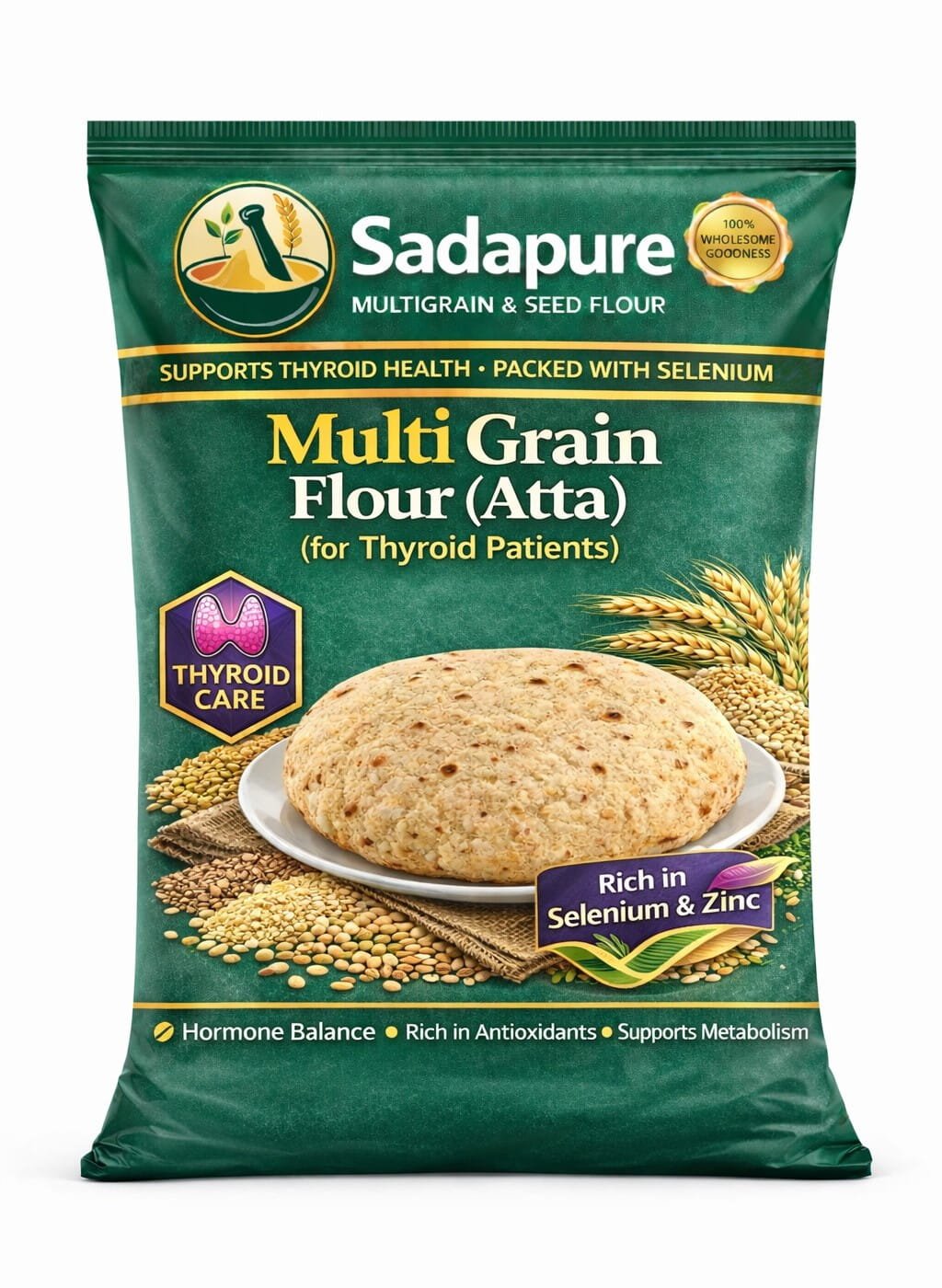
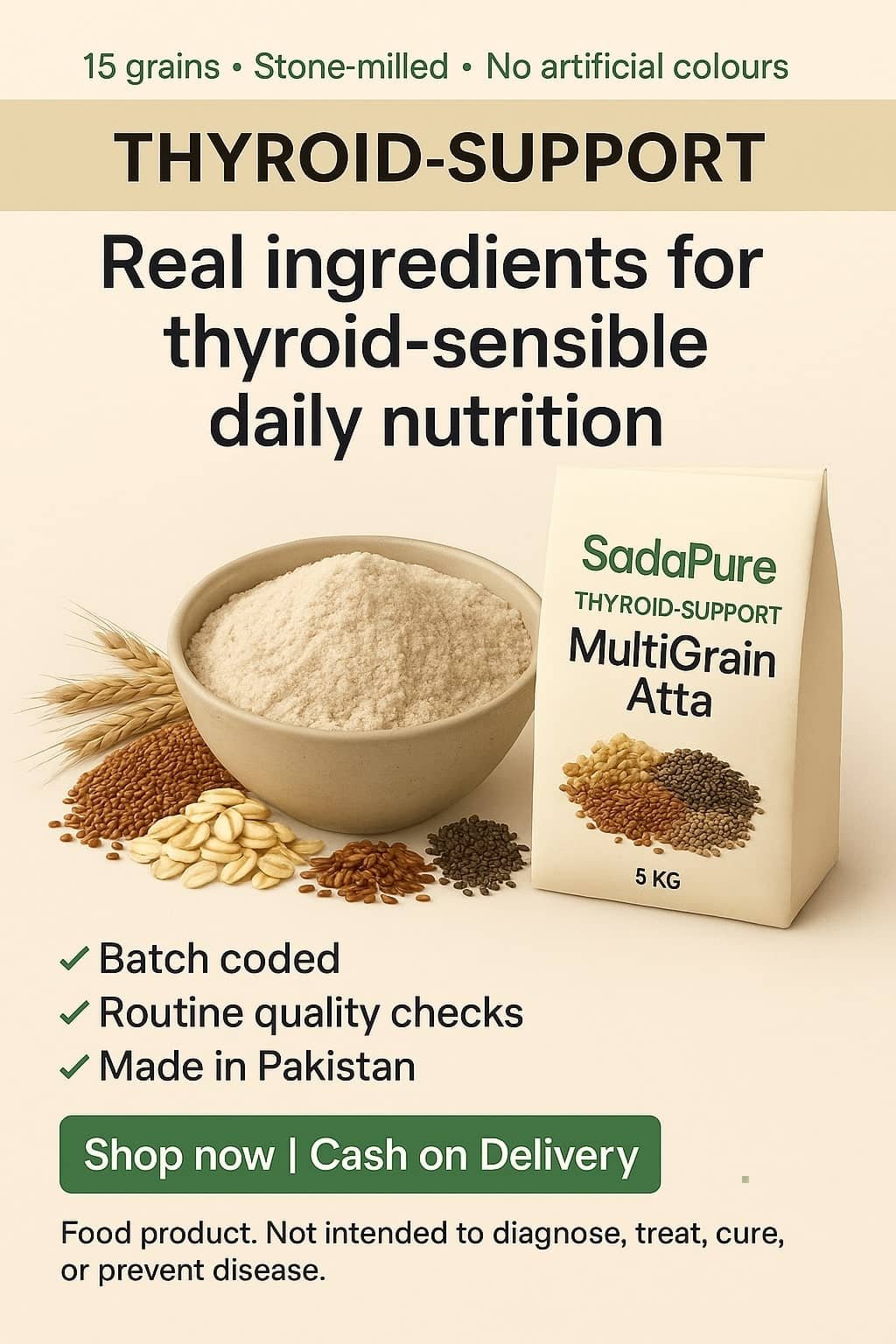
Multigrain Flour (Atta) for Thyroid Support – (5 KG) Bag – 15-Grain & Seed Blend
₨ 2,375 ₨ 2,000 ( 2.5 kg )
Balanced for Hypo & Hyperthyroid lifestyles*—a soy-free, seaweed-free 15-grain & seed blend with high-fiber oats & barley, nutrient-dense buckwheat, quinoa & amaranth, and low millet% for a sensible, everyday staple. Stone-ground feel, soft rotis, steady energy. Net: 5 KG.
NOTE: Each grain/seed is packed separately within the bag, with the name and weight clearly labeled on every pack. This ensures the flour’s taste and quality remain intact while earning the customer’s trust.
Description
Why this Flour?
- Thyroid-sensible formulation: Soy/seaweed free; millets kept low. Uses whole grains & pseudo-cereals that support a steady routine for both hypo & hyper scenarios.
- Fiber for balance: Oats + barley (β-glucans) for satiety and smooth energy release.
- Protein diversity: Buckwheat, quinoa & amaranth complement wheat for a rounder amino acid profile.
- Global-sale friendly: Clean label, simple allergen callouts, and practical dough guidance for soft rotis.
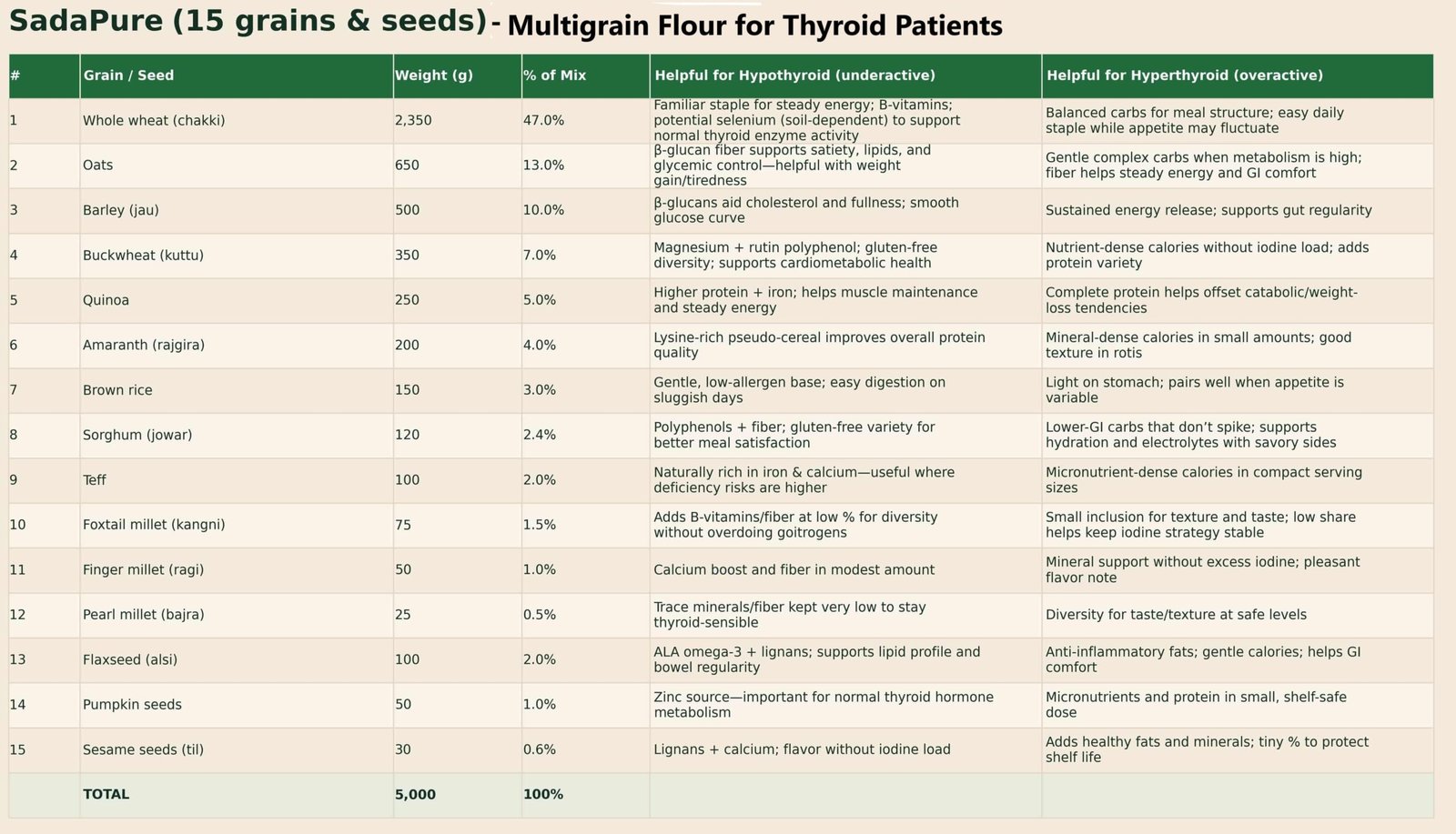
What’s inside (15 grains & seeds) — 5,000 g total
| # | Grain / Seed | Weight (g) | % of Mix | Notes (Universal Use) |
|---|---|---|---|---|
| 1 | Whole wheat (chakki) | 2,250 | 45.0% | Stable daily base; roti structure + consistent carbs |
| 2 | Oats | 550 | 11.0% | β-glucan fiber (moderate) for satiety/lipids without being too heavy |
| 3 | Barley (jau) | 450 | 9.0% | More β-glucan; kept moderate for GI comfort |
| 4 | Buckwheat (kuttu) | 300 | 6.0% | Mineral + polyphenol diversity; gluten-free variety |
| 5 | Quinoa | 250 | 5.0% | Complete protein support |
| 6 | Amaranth (rajgira) | 200 | 4.0% | Protein quality + minerals |
| 7 | Brown rice | 250 | 5.0% | Light digestion; balances fiber load |
| 8 | Sorghum (jowar) | 150 | 3.0% | Lower-GI variety; gut-friendly |
| 9 | Teff | 100 | 2.0% | Iron/calcium dense (small % for taste + nutrition) |
| 10 | Foxtail millet (kangni) | 75 | 1.5% | Very low inclusion (thyroid-sensible diversity) |
| 11 | Finger millet (ragi) | 50 | 1.0% | Calcium + fiber; kept low |
| 12 | Flaxseed (alsi) | 100 | 2.0% | Omega-3 (ALA) + bowel support |
| 13 | Pumpkin seeds | 50 | 1.0% | Zinc + protein (small dose) |
| 14 | Sesame seeds (til) | 25 | 0.5% | Flavor + minerals (low % for shelf stability) |
| 15 | Chickpea flour (besan) | 200 | 4.0% | Protein + better satiety; improves dough handling |
| TOTAL | 5,000 |
How to make soft rotis
- Hydration: Start with ~60–65% water (e.g., 300–325 ml per 500 g flour).
- Rest: Knead and rest 10–15 minutes; oats/barley absorb slowly.
- Cook: Medium-high tawa; puff both sides. Brush ghee/olive oil if desired.
Who is it for?
For adults seeking a sensible daily staple while managing thyroid health with their clinician. Suitable for families too. This product is food, not a medical treatment.
Helpful notes for thyroid routines
- Use iodized salt sensibly in everyday cooking unless your doctor says otherwise.
- If you take levothyroxine, have it on an empty stomach (30–60 min before breakfast) and separate from iron/calcium/high-fiber supplements by several hours.
Allergens & dietary info
- Contains: Wheat (gluten), Sesame.
- Free from: Soy, seaweed/kelp, artificial flavors, added sugar.
- 100% plant-based; suitable for vegetarians & vegans.
Storage & shelf life
- Store cool, dry, and away from sunlight. Reseal after opening.
- Target moisture ≤11–12%. Best before ~2 months at ≤28°C; sooner in very hot weather.
Specs
| Net Weight | 5 KG |
|---|---|
| Grind | Roti-friendly fine–medium (stone-ground feel) |
| Origin | Made in Pakistan (select global grains) |
| Pack | Multi-layer food-grade pouch with inner liner |
Thyroid Foods to Avoid (and When to Limit)
Bottom line: You don’t need a “fear list.” Focus on smart timing and avoiding mega-iodine. Here’s a practical guide for everyday life.
1) High-iodine seaweeds & supplements
- Avoid: Kelp/seaweed tablets, iodine drops/sprays, “thyroid booster” supplements.
- Okay in moderation: Normal iodized salt in cooking (as advised by your clinician).
- Why: Very high iodine can disturb thyroid balance, especially in hyperthyroidism or nodular disease.
2) Around your thyroid medication (levothyroxine)
- Take on empty stomach with water; then wait 30–60 min before food/coffee.
- Keep a 4-hour gap from soy foods, calcium (milk, fortified juices, supplements) and iron supplements.
- Why: These reduce absorption and make your dose look “wrong.”
3) Goitrogens (context matters)
- Millets: Don’t rely on them as the bulk of your diet; enjoy in small percentages within a diverse grain mix.
- Cruciferous veg (raw): Cabbage, broccoli, kale, cauliflower—fine when cooked and eaten as part of a varied diet with adequate iodine.
- Why: Certain plant compounds can inhibit thyroid enzymes if iodine intake is poor or if eaten in very large amounts.
4) Before blood tests
- Stop high-dose biotin (“hair/skin/nails” pills) for a few days before thyroid labs to avoid false results.
Quick swaps
| Limit/Avoid | Better Choice | Tip |
|---|---|---|
| Kelp/iodine supplements | Iodized table salt (normal use) | Skip “thyroid booster” pills unless prescribed. |
| Soy foods at pill time | Soy at lunch/dinner | Keep a 4-hour gap from levothyroxine. |
| Coffee with your pill | Water with pill; coffee later | Wait 30–60 minutes after dosing. |
| Millets as main staple | Mixed grains (oats, barley, wheat, buckwheat) | Use millets as a small % of total grains. |
| Raw crucifers daily | Cooked crucifers, mixed veg | Steaming/cooking reduces goitrogens. |
| High-dose biotin pre-test | No biotin for a few days | Tell the lab about all supplements. |
Medical note: Diet supports—but does not replace—thyroid treatment. Always follow your clinician’s advice.
FAQs
Q: Is it for both hypo & hyperthyroidism?
A: Yes—as a daily staple with sensible iodine use and proper medication timing. It’s not a cure; follow your clinician’s plan.
Q: Is it gluten-free?
A: No—this SKU contains wheat. Choose a certified gluten-free line if needed.
Q: Why are millets kept low?
A: For diversity without overuse; this keeps the blend broadly sensible for thyroid routines.
Q: Which flour is best for thyroid patients?
There isn’t one universal “best Support”; choose a balanced whole-grain blend that’s soy/seaweed-free and keeps millets modest.
SadaPure Thyroid-Support Multigrain Atta (15-grain) is formulated for everyday use in both hypo and hyper routines.
Use iodized salt sensibly and time thyroid medication away from meals as advised by your clinician.
Q: Is multigrain atta good for thyroid patients?
Yes – but just for “Support ” not a complete treatment. When thoughtfully designed: diverse whole grains, very low millet %, and no kelp/seaweed or soy at pill time.
SadaPure’s blend emphasizes oats/barley fiber plus buckwheat/quinoa/amaranth for nutrient density.
It’s food, not medicine—pair with medical care and proper levothyroxine timing.
Q: Is multigrain flour good or bad for you?
Generally good when it’s whole-grain focused and not overloaded with refined flours or added sugars.
SadaPure prioritizes fiber and micronutrient variety to support steady energy and everyday wellness.
Individual needs vary—adjust portions and ingredients with your healthcare professional.
Q: Which grains should I avoid in my thyroid?
No grain is automatically “banned,” but avoid making high-millet diets your staple—keep millets to a small % of blends.
Wheat/oats/barley/buckwheat/quinoa/amaranth are sensible mainstays; choose gluten-free only if medically required.
Also avoid seaweed/kelp products and keep soy away from pill time to protect medication absorption.
Disclaimer: This product is regular food. Nutrition values vary by crop & milling. Always follow medical advice for thyroid conditions.
Additional information
| Weight | 2.5 kg |
|---|
Related products
-
 Sale!
Sale!
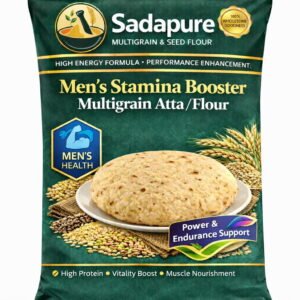
SadaPure Men’s Stamina Booster Multigrain Atta (Flour) 5KG – مردانہ طاقت کا راز
₨ 2,250₨ 2,000 ( 2.5 kg ) Add to cart -
 Sale!
Sale!
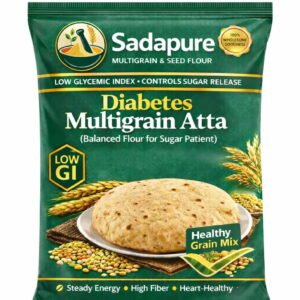
Diabetes Support Multigrain Atta (Balanced Flour for Sugar) – 5 kg
₨ 2,375₨ 2,000 ( 2.5 kg ) Add to cart -
 Sale!
Sale!
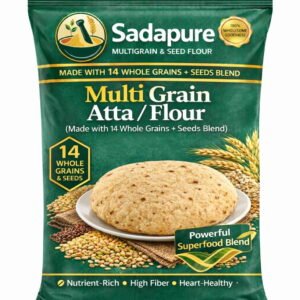
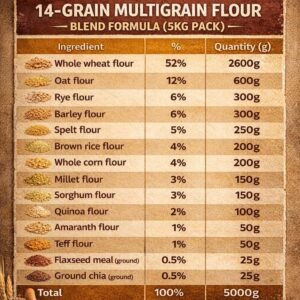
Multi Grain Atta / Flour (ملٹی گرین آٹا) / – Made with 14 Whole Grains + Seeds Blend
₨ 1,125₨ 998 ( 2.5 kg ) Add to cart -
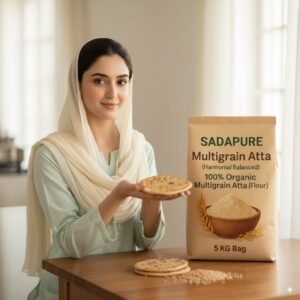 Sale!
Sale!
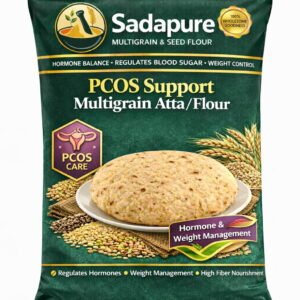
PCOS Support Multigrain Atta – 100% Organic, Hormonal Balanced Flour, 5kg Bag
₨ 2,050₨ 1,950 ( 2.5 kg ) Add to cart
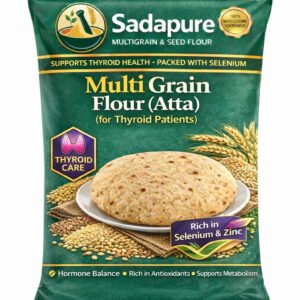
Reviews
There are no reviews yet.