
★★★★★
Clear quantity and value
The listed size matched the bottle and the per-litre pricing made comparison easy.
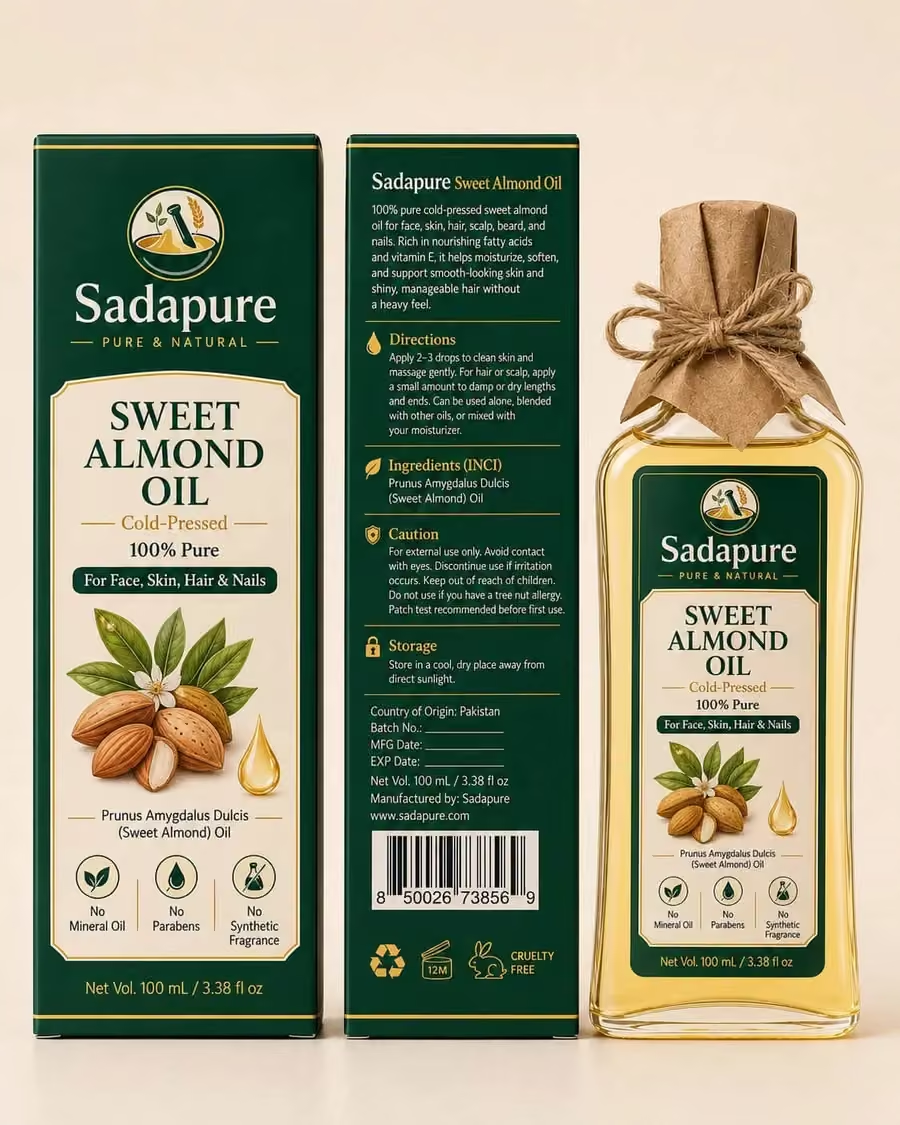
SadaPure Sweet Almond Oil is cold-pressed from sweet almond kernels, with no added oils or fillers. Smooth, mild-smelling, and easy to spread, it helps soften dry skin, smooth rough hair, and keep hands and cuticles feeling comfortable. Use it for facial care, pre-shampoo hair oiling, or a relaxing body massage. A few drops are often enough for smaller areas, making it a useful addition to your everyday personal-care routine.
SadaPure Sweet Almond Oil is cold-pressed from sweet almond kernels, with no added oils or fillers. Smooth, mild-smelling, and easy to spread, it helps soften dry skin, smooth rough hair, and keep hands and cuticles feeling comfortable. Use it for facial care, pre-shampoo hair oiling, or a relaxing body massage. A few drops are often enough for smaller areas, making it a useful addition to your everyday personal-care routine.
Some oils have a strong, lingering scent. Sweet almond oil is much quieter. It has a mild scent, is usually pale gold, and spreads easily. That makes it useful when your skin feels dry, or your hair needs a little softness without another heavily scented product.
SadaPure Sweet Almond Oil is pressed from sweet almond kernels. The formula contains almond oil, not a blend of different oils. It contains no fillers to change its texture or make the bottle go further.
This oil is for external use. Apply it after washing your hands, smooth a little over dry hair ends, or use it for a gentle body massage. Use as much as you need, depending on the area you're treating. Your face may need only a couple of drops, while your arms or legs will need more.
It feels smooth and slightly rich, leaving a thin oily layer after application. On dry skin, that layer can help slow moisture loss. On already oily skin, the same amount may feel like too much.
The easiest way to use it is to begin with less. Warm a little between your palms before applying. This way, you can gauge how much your skin needs without leaving an uncomfortable coating.
Sweet almond oil is generally light yellow to golden, with a mild nutty scent. It should not need added perfume to smell pleasant.
The color may vary with the almonds and processing. A slightly different shade is not automatically a problem, but color cannot confirm purity. The ingredient label, batch information, and quality records tell you more than appearance alone.
It's useful for small areas that often get overlooked: rough-feeling ends of hair, hands that dry out after washing, and the skin around nails that catches on clothing.
For larger areas, use it as a body oil after bathing. It also gives enough slip for massage without needing a complicated mixture.
The main reason to use almond oil is straightforward. It helps skin feel softer and hair easier to manage. It doesn't need to promise anything beyond that to be useful.
روغن بادام شیریں (Sweet Almond Oil) خشک جلد، روکھے بالوں اور ہاتھوں کی خشکی کے لیے استعمال کیا جاتا ہے۔ نہانے کے بعد ہلکی نم جلد پر تھوڑی سی مقدار لگائیں تاکہ جلد نرم محسوس ہو۔ بالوں کے خشک سروں پر چند قطرے ہاتھوں سے پھیلا دیں اور ضرورت کے مطابق مقدار بڑھائیں۔ بادام سے الرجی رکھنے والے افراد یہ تیل استعمال نہ کریں، کیونکہ کولڈ پریسڈ تیل میں بادام کے ایسے اجزا موجود رہ سکتے ہیں جو الرجی کا سبب بنیں۔
Sweet almond oil works mainly as a skin-softening ingredient. Its natural fats form a thin layer over the skin, reducing moisture loss and making dry areas feel more comfortable.
It also contains naturally occurring vitamin E and fatty acids, including oleic and linoleic acids. These are part of the oil's composition, but testing would be needed to confirm their exact amounts in a SadaPure bottle.
If your skin feels tight after a shower or face wash, almond oil can help reduce that dry feeling. It spreads over the surface and slows moisture loss.
Apply a small amount while your skin is still slightly damp. You can also apply it over a regular moisturizer when dry areas need a little extra care.
Soap, cleaning products, and repeated handwashing can leave the skin feeling rough. A few drops of sweet almond oil can smooth dry hands.
Rub it over your palms, fingers, and the backs of your hands after washing. Pay attention to the skin around the knuckles, where dryness is often more noticeable.
Some parts of the body become dry more easily because of pressure, friction, or frequent washing. The elbows and heels are common examples.
Massage a small amount of almond oil into these areas after bathing. It can soften rough skin, but severely cracked or painful skin may need a different treatment.
Sweet almond oil can help dry or tight facial skin. Start with one or two drops and spread them over the areas that need attention.
It works as an extra layer of moisture protection, not a replacement for all other skincare steps. If your skin is oily or breaks out easily, use it with care and watch how your skin responds.
Your skin's outer layer acts as a barrier that helps retain moisture. When it becomes dry, skin may feel rough, tight, or uncomfortable.
Almond oil helps by coating that surface. It can be useful after bathing, particularly when the skin is still slightly damp. It does not treat eczema, damaged skin, or other medical conditions on its own.
Sweet almond oil naturally contains vitamin E, an antioxidant. Vitamin E is one reason almond oil is widely used in cosmetic products.
However, vitamin E content varies, and applying almond oil doesn't guarantee it will make wrinkles, dark spots, or scars disappear. Its clearest everyday value is conditioning and moisturizing the skin.
The oil glides easily over healthy skin and gives your hands enough slip for a gentle massage. Its mild scent is useful when you don't want a strong fragrance.
Warm a little between your palms before applying it. Add more only when needed. Massage can be relaxing, but it should not be described as a treatment for injury, arthritis, or chronic pain.
The skin surrounding your nails can become dry and hard, especially after washing or cleaning.
Rub a drop of sweet almond oil around the base of each nail. This can help soften the skin and make it feel more comfortable. It does not make nails grow faster or repair a damaged nail.
Hair doesn't always need another styling product. Sometimes the ends feel dry, strands tangle, or brushing creates more frizz.
Sweet almond oil coats the hair surface, making strands feel smoother. This can make combing easier and add a little shine to dry lengths.
It's a cosmetic effect on existing hair. The oil cannot permanently repair split ends, reverse heat damage, or change how quickly hair grows.
The ends are often the driest part of long hair because they've been exposed to more washing, brushing, and heat.
Start with a drop or two rubbed between your palms. Run your hands lightly over the ends, adding more only if your hair still feels rough.
Fine hair usually needs less oil. Thick or coarse hair may tolerate a little more.
If your hair feels rough after washing, try applying sweet almond oil before shampooing.
Spread a modest amount through the lengths, concentrating on the dry sections. Leave it for around 20–30 minutes, then wash thoroughly.
You don't need to soak your entire head. The goal is to lightly coat the hair, not make it hard to shampoo.
You can use a small amount for gentle massage if your scalp is healthy and not irritated.
Part your hair, apply a little oil to your scalp, and massage it with your fingertips. Avoid scratching with your nails or applying so much oil that it becomes difficult to wash out.
If you have dandruff, scalp redness, itching, or inflammation, oiling may not be suitable. Those problems can have causes that need proper treatment.
Dry, tangled hair can be difficult to comb. By smoothing strands, almond oil may reduce pulling and friction during grooming.
That doesn't mean it strengthens hair follicles or stops hair loss from the root. If hair breaks from repeated heat styling or chemical damage, changing those habits matters too.
There is not enough strong clinical evidence to promise new hair growth from applying sweet almond oil.
It can make existing hair feel softer and look better groomed. If you have hair thinning, bald patches, or unusual shedding, check the cause rather than relying on oil alone.
You don't need the same amount for every area. A small application on your face is very different from oiling long hair or massaging your legs.
Start with a little and adjust according to how your skin or hair feels.
Wash your face and leave the skin slightly damp. Put 1 or 2 drops on clean fingertips and gently spread them over the dry areas, avoiding the eyes.
If you already use a moisturizer, you can apply almond oil afterward. Skip it if your skin already feels comfortable.
During the day, let your skincare settle before applying sunscreen. Almond oil is not a substitute for SPF protection.
For a leave-in finish, use a very small amount on the middle lengths and ends.
For a wash-out treatment, apply a little more before shampooing. Comb gently and wash until your hair feels clean.
Avoid the roots if your hair becomes oily easily.
Pat your skin dry but leave a little moisture on the surface. Warm oil between your palms and spread it over dry areas.
Allow it to settle before dressing. Using too much can leave an oily layer on clothing.
After washing your hands, massage a drop or two around the fingers and nail edges.
This is especially useful before bed, when you won't need to handle papers, a keyboard, or other objects right afterward.
Sweet almond oil can loosen some oil-based makeup. Massage a small amount into dry skin, taking care not to get it in your eyes.
Remove the loosened makeup with a soft cloth, then follow up with a gentle facial cleanser.
Pure almond oil doesn't rinse away with water as easily as a specially formulated cleanser.
Sweet almond oil is used as a carrier in some massage and cosmetic preparations.
If you add concentrated essential oils, follow the safety limits for each essential oil. Different oils have different skin-use restrictions, and some are unsuitable for the face or for certain users.
Make a small batch and check skin tolerance before wider use. People with almond allergies should not use almond oil as a carrier.
Sweet almond oil comes from sweet almond kernels. The oil is extracted by pressing and then collected for its intended use.
SadaPure identifies its product as pure, cold-pressed sweet almond oil for external cosmetic care.
| Product detail | Information |
|---|---|
| Product name | SadaPure Cold-Pressed Sweet Almond Oil |
| Urdu name | روغن بادام شیریں / میٹھے بادام کا تیل |
| Botanical name | Prunus dulcis |
| Cosmetic ingredient name | Prunus Amygdalus Dulcis Oil |
| Source | Sweet almond kernels |
| Declared ingredient | Sweet almond oil |
| Extraction | Cold-pressed |
| Typical colour | Pale yellow to golden |
| Natural scent | Mild, slightly nutty |
| Main fatty acids | Oleic acid and linoleic acid |
| Naturally occurring compound | Vitamin E |
| Intended uses | External skin, hair and body care |
| Food use | Not established for this SadaPure product |
Cold-pressing uses mechanical pressure to release the oil from almond kernels rather than extracting it with chemical solvents.
The method can help retain some of the oil's naturally occurring components, but it doesn't guarantee specific vitamin content or prove one bottle is better than another.
The almonds' condition, equipment cleanliness, post-extraction processing, and storage all affect the finished product.
No. Sweet almond oil and bitter almond oil are not interchangeable.
Sweet almond oil is the oil commonly used in skincare and body massage. Bitter almond products come from a different type of almond and may contain different chemical compounds and carry different safety concerns.
Check the botanical name and intended use rather than buying a bottle labeled only as "almond oil."
Sweet almond oil naturally contains vitamin E, along with fatty acids such as oleic and linoleic acid.
These components support its use in cosmetic products, but testing is needed to confirm the exact vitamin E amount in a particular bottle.
Avoid claims of unusually high vitamin levels unless a suitable analysis supports them.
Start with the ingredient list. The product should clearly identify sweet almond oil rather than an unexplained mixture.
Check the extraction method, batch information, bottle volume, and expiry date.
Color and smell can provide useful clues, but neither confirms purity on its own. Reliable supplier records and appropriate testing provide stronger evidence.
Sweet almond oil is widely used in personal-care products, but it comes from a tree nut. That matters for people with almond allergies.
Never dismiss a known allergy simply because the product is natural or intended only for external use.
Cold-pressed almond oil may contain traces of almond proteins that can trigger reactions in people with an almond allergy.
If you have a known almond allergy, avoid using the product unless an allergy specialist has advised otherwise. A home patch test is not a safe way to rule out a potentially serious nut allergy.
If you're allergic to other tree nuts, ask your allergy specialist whether almond oil is appropriate for you.
If you don't have a known almond allergy but worry about skin irritation, try a small amount on a small patch of healthy skin before applying it more widely.
Watch for redness, itching, or discomfort. Sensitive skin may take several days to show a reaction, so don't assume one comfortable application proves long-term tolerance.
Stop using the oil if you experience irritation.
Avoid getting the oil into your eyes. Be careful when using it on the face, especially near the eyelids.
No reliable evidence shows that sweet almond oil removes dark circles or makes eyelashes grow.
Use suitable eye-area products when that is your main concern.
Sweet almond oil is a tree-nut product, so it shouldn't automatically be considered suitable for infants.
Babies' skin needs special care, especially if they have eczema, a known food allergy, or a family history of allergic conditions.
Ask a pediatrician before using almond oil on a baby. Do not use it on broken or irritated skin.
This product is intended for external hair, skin, and body care. Do not assume that it is food-grade.
Some sweet almond oils are prepared and labeled for food use, but cosmetic suitability does not mean they are edible.
Only consume a product when its manufacturer clearly identifies it as food-grade and provides suitable directions.
Keep the bottle tightly closed and away from sunlight, heat, and moisture.
Avoid leaving it beside a stove or in a hot, sunny window. Use clean, dry hands or a clean dropper when handling the oil.
Follow the expiry date on the bottle. If it develops a distinctly stale or rancid smell, stop using it.
If you're using almond oil mainly for your face, cuticles, or occasional hair care, a smaller bottle may be enough.
For frequent body massage or longer hair, a larger bottle may be more practical.
Choose the current size on the product page and compare the price with the volume. The smallest bottle isn't always the cheapest per milliliter, but buying more than you can use before expiry isn't good value either.
Begin with the ingredient name. The label should identify sweet almond oil, usually as Prunus Amygdalus Dulcis Oil. Next, check the extraction method, bottle volume, expiry date, and intended use. Cold-pressed describes how the oil was extracted. Organic refers to how the almonds were grown and requires suitable certification if a brand claims certified status. Vitamin content is another matter and may need laboratory testing. Don't judge purity by price, color, or a list of impressive words alone. Clear product records are more valuable than broad marketing claims.
If your moisturizer already leaves your skin comfortable, you may not need almond oil. If dry areas still feel tight, try a small amount after your moisturizer to help reduce moisture loss. Use one or two drops, spread them gently, and watch how your skin responds. Avoid applying so much that your face feels coated. During the day, sunscreen remains important. Don't mix almond oil directly into your sunscreen or rely on the oil for sun protection.
Sweet almond oil can feel too rich for some oily or acne-prone skin types. Whether it suits you depends on your skin and how much you use. If you want to try it, start with a very small amount on a dry area instead of covering your whole face. Watch for new pimples or irritation over several uses. If your acne is active or persistent, choose appropriate acne care instead of relying on almond oil. It is mainly a moisturizing and skin-conditioning ingredient, not an acne treatment.
There isn't strong evidence that sweet almond oil removes dark circles or eye puffiness. Dark circles can have different causes, including genetics, allergies, and lack of sleep. Moisturizing can temporarily smooth dry skin, which may reduce the appearance of some fine lines. That is different from removing wrinkles. Be cautious around the eyes and avoid getting oil into them. If your main concern is dark circles or persistent swelling, an eye-care professional or dermatologist can help identify the cause.
Both methods can work for cosmetic hair care. Before washing, spread a small amount through the lengths, leave it on for about 20–30 minutes, then shampoo thoroughly. For a smoother finish after washing, rub one or two drops between your palms and apply them to the ends. Start with less if your hair is fine. Almond oil can make hair easier to manage, but it cannot permanently repair split ends or damage caused by heat and chemicals.
There isn't enough strong evidence to promise hair regrowth from sweet almond oil. It can help condition existing hair and make dry strands easier to handle. Gentle scalp massage may feel pleasant, but oiling does not treat every cause of hair loss. Hair shedding may be related to genetics, illness, hormones, nutrient deficiencies, or scalp conditions. If you have ongoing shedding, thinning, or bald patches, seek an assessment rather than relying on oil alone.
A dry scalp and dandruff can look similar, but they may have different causes. A small amount of almond oil can help a healthy scalp that just feels dry. However, if dandruff or another scalp condition causes the flakes, adding oil may not solve the problem and can sometimes make it worse. If you're experiencing redness, persistent itching, or heavy flaking, use suitable treatment and seek professional advice. You can still apply a little oil to dry hair ends without coating the scalp.
Cold-pressed almond oil may contain allergenic almond proteins. People with a known almond allergy should avoid it unless an allergy specialist advises otherwise. A family history of allergies does not automatically mean everyone is allergic to almonds, but it's sensible to use extra care. Do not use almond oil on a baby without first discussing it with a pediatrician, especially if the baby has eczema or a known food allergy. Never use a home patch test to determine whether a known serious nut allergy is safe.
Sweet almond oil is the type commonly used as a cosmetic carrier oil. Bitter almond oil is different and should not be treated as an interchangeable product. The seeds and their chemical compounds differ. Some bitter almond preparations raise safety concerns that don't apply in the same way to ordinary sweet almond cosmetic oil. For skin and hair care, check that the bottle clearly identifies sweet almond oil and states its intended use. Don't choose a product labeled only "almond oil" without checking the details.
SadaPure's current product information presents the oil for external cosmetic use. It does not establish that this bottle is intended for consumption. There is also insufficient reliable evidence to support claims that taking a particular retail almond oil improves memory or treats constipation. Some almond oils are manufactured and labeled for food use, but you must evaluate them as food products. Do not drink a cosmetic oil or follow traditional oral dosing advice without checking the product's intended use and relevant medical guidance.
Think about how you'll use it. A small bottle may last a long time if you're applying only a few drops to your face, hands, or hair ends. A larger bottle may make more sense for frequent body massage or long hair. Compare the price per milliliter rather than just the price on the listing. Check the current bottle sizes, stock, delivery charge, and return information before ordering. Also read the ingredient and allergy information. If you have a known almond allergy, this product may not be suitable regardless of its price or bottle size.
What real SadaPure customers say about Sweet Almond Oil (بادام کا تیل).
The listed size matched the bottle and the per-litre pricing made comparison easy.
The scent is subtle and the oil spreads easily after warming a few drops in the palms.
The texture works well for hair lengths, hands and dry skin without feeling unusually thick.