
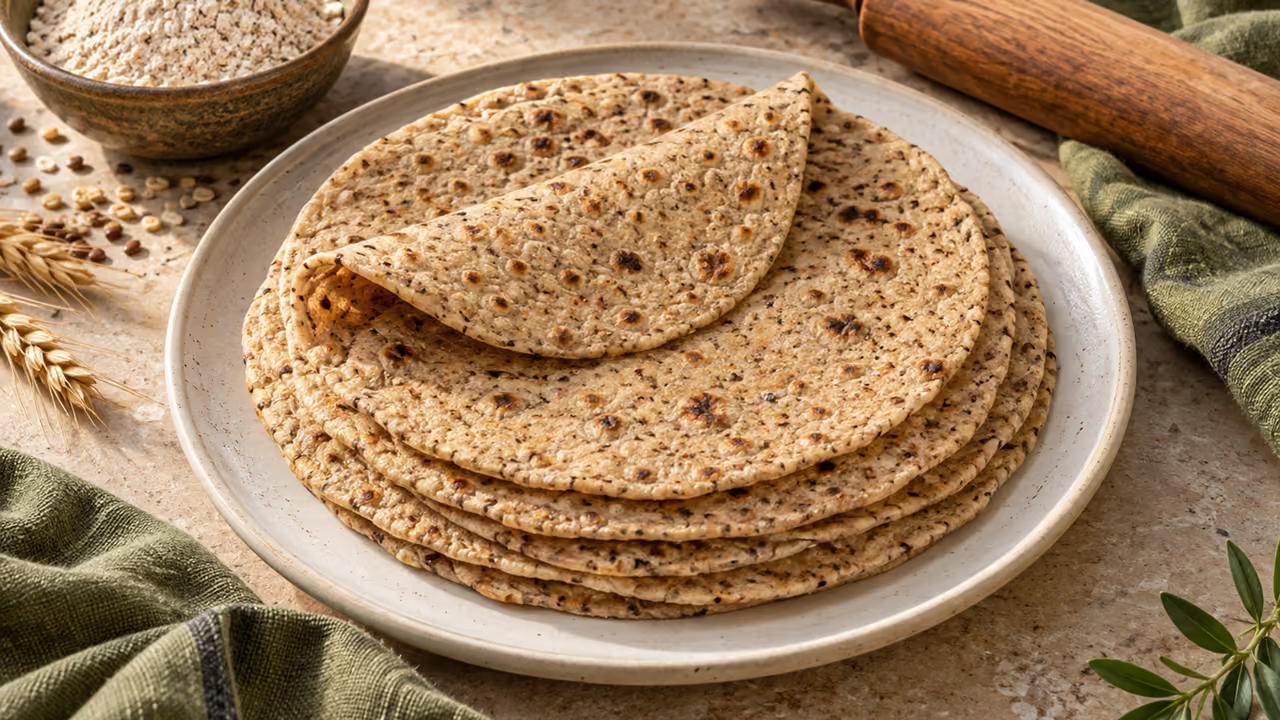
Make a small batch of multigrain roti with SadaPure’s 18-ingredient atta, water and a hot tawa. Start with a soft dough, rest it covered for 20 minutes and cook by the bubbles and brown spots—not by the clock alone.
روٹی بنانے کا طریقہ اردو میں سنیں
اجزاء، آٹا گوندھنے، بیلنے اور توے پر پکانے کی مکمل رہنمائی۔ آواز مصنوعی طور پر تیار کی گئی ہے۔
مکمل تحریری ہدایات پڑھیں
آئیے سادہ پیور کے اٹھارہ اجزاء والے آٹے سے ملٹی گرین روٹی بنائیں۔ اس مقدار سے تقریباً آٹھ چھوٹی روٹیاں بنیں گی۔ تیاری، آٹا رکھنے اور پکانے کے لیے تقریباً چھیالیس منٹ رکھیں۔ پانی کی مقدار اور پکنے کا وقت آپ کے آٹے اور توے کے مطابق کچھ بدل سکتا ہے۔
دو سو پچاس گرام آٹا لیں۔ شروع میں ایک سو اسی ملی لیٹر نیم گرم پانی استعمال کریں، اور ضرورت کے لیے چالیس ملی لیٹر مزید پانی الگ رکھ لیں۔ چاہیں تو چوتھائی چائے کا چمچ نمک اور ایک چائے کا چمچ کھانے کا تیل بھی شامل کریں۔ نمک اور تیل دونوں اختیاری ہیں۔
پہلے آٹے میں پانی تھوڑا تھوڑا ڈال کر ملائیں۔ اگر خشک آٹا باقی ہو تو مزید پانی ایک چائے کے چمچ کی مقدار میں شامل کریں۔ چار سے پانچ منٹ نرمی سے گوندھیں۔ آٹا نرم ہو، ہاتھ پر ہلکا سا چپکے، لیکن بہنے والا یا بہت گیلا نہ ہو۔ اضافی پانی سارا ڈالنا ضروری نہیں۔
پیالے کو پلیٹ یا صاف نم کپڑے سے ڈھانپ کر بیس منٹ رکھ دیں۔ پھر ہلکا سا دوبارہ گوندھیں۔ اگر کناروں پر گہری دراڑیں آئیں تو نم ہاتھوں سے تھوڑا پانی ملائیں۔ اگر آٹا بہت چپک رہا ہو تو ایک چائے کا چمچ خشک آٹا ملا کر دوبارہ دیکھیں۔
آٹھ برابر پیڑے بنائیں اور انہیں ڈھک کر رکھیں۔ ایک پیڑے پر ہلکا سا خشک آٹا لگا کر تقریباً چودہ سے پندرہ سینٹی میٹر کی روٹی بیلیں۔ موٹائی تقریباً دو ملی میٹر اور ہر طرف یکساں رکھیں۔ ضرورت سے زیادہ خشک آٹا نہ لگائیں۔
خشک توے کو درمیانی سے قدرے تیز آنچ پر گرم کریں۔ روٹی ڈالیں۔ اوپر کی گیلی چمک ختم ہونے اور چھوٹے بلبلے بننے پر پلٹ دیں۔ عام طور پر اس میں تیس سے پینتالیس سیکنڈ لگتے ہیں۔ دوسری طرف تقریباً پینتالیس سے ساٹھ سیکنڈ پکائیں، یہاں تک کہ بھورے دھبے بن جائیں۔ ضرورت ہو تو دوبارہ پلٹ کر تھوڑا مزید پکائیں۔ اگر دھبے جلدی سیاہ ہو رہے ہوں اور اندر آٹا کچا ہو تو آنچ کم کریں۔ روٹی پوری طرح پکائیں؛ اندر کچا، چپچپا آٹا باقی نہ رہے۔
پکی روٹی صاف کپڑے والے روٹی دان میں رکھ کر ڈھانپ دیں۔ چاہیں تو ہلکا سا گھی یا تیل لگائیں۔ باقی روٹیاں بھی اسی طرح پکائیں اور دال یا سبزی کے ساتھ گرم پیش کریں۔ روٹی کا پوری طرح غبارے کی طرح پھولنا ضروری نہیں؛ یکساں پکنا زیادہ اہم ہے۔
اہم احتیاط: اس آٹے میں گندم، جو، رائی اور تل شامل ہیں۔ یہ گلوٹن سے پاک نہیں۔ الرجی کی صورت میں پیکٹ پر مکمل اجزاء ضرور پڑھیں۔ کچا آٹا یا گوندھا ہوا کچا آٹا نہ چکھیں۔ ہاتھ اور برتن دھوئیں۔ بچی ہوئی روٹیاں جلد فریج میں رکھیں۔ یہ طریقہ رہنمائی کے لیے ہے؛ اپنے باورچی خانے میں پانی اور آنچ کے مطابق معمولی تبدیلی کریں۔
Multigrain roti, step by step
5 / 5 from 1 reader review
- Prep
- 10 min
- Rest
- 20 min
- Cook
- 16 min
- Total
- 46 min
- Makes
- 8 small rotis
About 4 servings of 2 rotis. Times are approximate for one tawa. The water range is a starting guide; use the dough cues below.
Equipment
Kitchen scale, measuring jug, mixing bowl, cover or clean damp cloth, rolling pin and board, tawa or heavy flat pan, spatula and a covered roti box.
Ingredients
Tick ingredients as you prepare them. Your ticks stay on this page only.
Allergen check: this flour contains wheat, barley, rye and sesame. It is not gluten-free. Check the pack’s full ingredient list before cooking.
Method
Step images are AI illustrations; follow the written dough and cooking cues.
Mix gradually
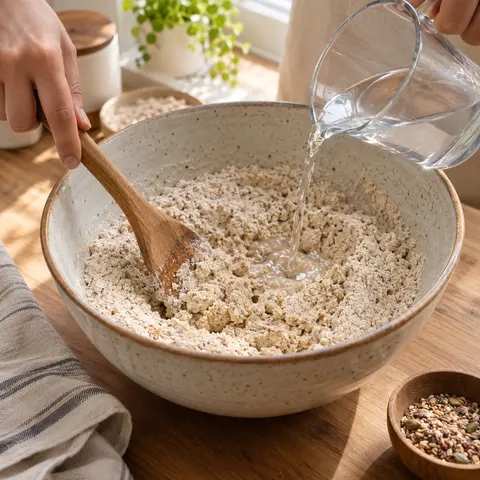
Put 250 g atta and the optional salt in a bowl. Add 180 ml lukewarm water in several additions, mixing until no loose flour remains. Add the optional teaspoon of oil. If dry flour remains or the dough will not come together, add extra water 1 teaspoon at a time. Aim for a soft dough that holds together, not a pourable mixture.
Knead until workable
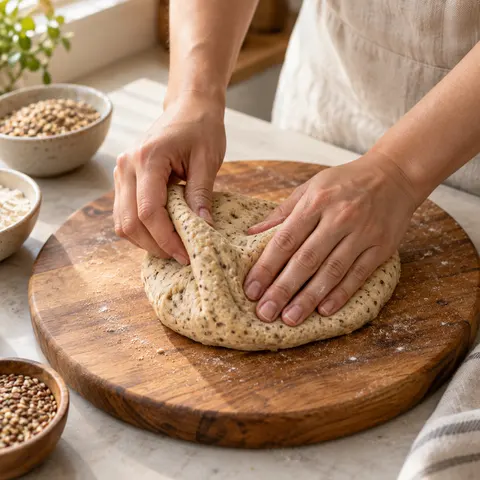
Knead for about 4–5 minutes, folding and pressing gently. The dough should feel soft and slightly tacky rather than stiff. Water absorption varies; the extra 40 ml is a reserve, not an amount you must use. Stop adding water once the dough is workable.
Cover and rest for 20 minutes
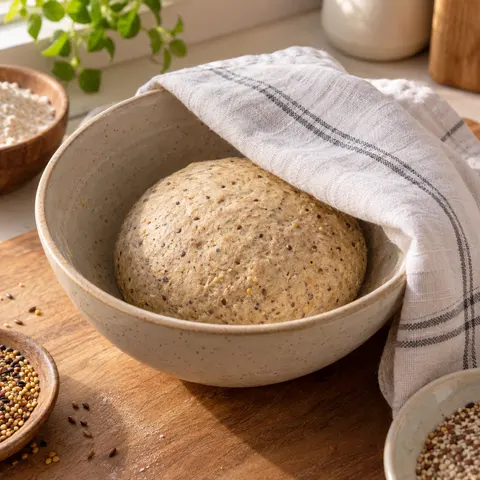
Cover the bowl with a plate or a clean damp cloth. Rest for 20 minutes so the flour can absorb moisture. Knead briefly again. If a pressed edge splits deeply, work in water with damp hands; if the dough smears, knead in a teaspoon of atta and check again.
Divide and roll evenly
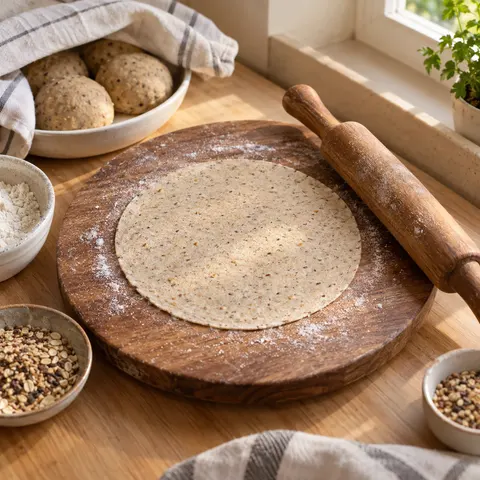
Divide into 8 equal pieces and keep them covered. Roll one piece into a smooth ball, flatten, then lightly dust both sides. Roll into a circle roughly 14–15 cm across and about 2 mm thick. Rotate between strokes and use only enough dusting flour to prevent sticking.
Cook both sides on a preheated tawa
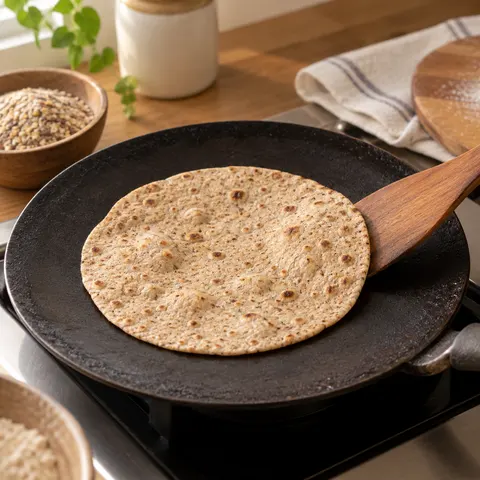
Heat a dry tawa over medium-high heat, then adjust to your pan. Lay on one roti. When the top loses its wet shine and small bubbles appear, usually after 30–45 seconds, flip. Cook the second side for about 45–60 seconds until brown spots develop. Flip again briefly if needed, pressing raised edges gently with a spatula. Cook until no raw, sticky dough remains. These times are guides: lower the heat if spots blacken before the centre cooks.
Keep covered and serve warm
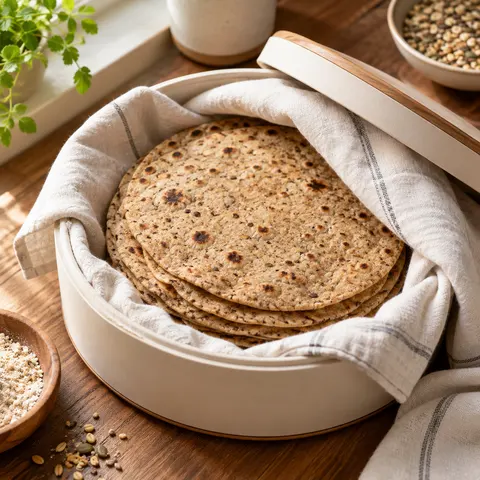
Move the cooked roti into a clean cloth-lined roti box and cover. Brush lightly with optional ghee or oil if you like. Repeat with the remaining pieces, adjusting the tawa heat between rotis. Serve warm with dal, sabzi or your usual meal.


What makes this multigrain roti method different?
SadaPure's blend contains 48% whole wheat alongside other cereals, pulses, seeds, husk and small amounts of spices and moringa leaf. The number 18 refers to ingredients, not 18 different grains. Use the prepared atta straight from the pack; this recipe does not ask you to mix those ingredients separately.
The practical difference is in handling the dough. Do not assume that the water amount or rolling feel will match your usual wheat-only atta. Add water gradually, give the dough its covered rest, then assess it again. A dough that felt workable immediately after mixing can feel firmer once the flour has absorbed more moisture.
For the complete composition, pack sizes and ingredient percentages, see SadaPure Multigrain Atta product details. This page concentrates on making roti with that blend.
How should the dough feel before you roll it?
Press a fingertip gently into the rested dough. It should leave a dent without the whole piece breaking apart. Pinch off a small piece and flatten it: it should stay together and feel soft, with slight tackiness rather than a wet coating on your fingers. These checks are more useful than adding the full water allowance automatically.
If the dough feels stiff, use damp hands to knead in a little more water. If it is difficult to lift from the bowl because it smears, add a teaspoon of the same atta, knead briefly and check again. Make small adjustments. Adding a large handful of dry flour can leave you chasing the right consistency with more water.
Fix dry, cracking or unevenly cooked roti
| What you see | What to check | What to change next |
|---|---|---|
| Deep cracks at the edge while rolling | Dough too firm, insufficient rest or uncovered portions drying out | Knead with damp hands, cover and rest briefly. Keep the remaining balls covered. |
| Dough sticking heavily to the board | Dough too wet or rolling before moisture has settled | Give it its rest. Add a teaspoon of atta only if still unworkable, then dust the board lightly. |
| Dark spots but a raw centre | Tawa too hot or an unevenly thick middle | Lower the heat slightly and roll the next roti to an even thickness. Cook the current roti through. |
| A pale, stiff roti after prolonged cooking | Tawa not hot enough, causing the roti to dry before browning | Let the tawa preheat, then adjust the heat using bubbles and browning as your guide. |
| Roti becomes crisp around the edges | Too much dusting flour, prolonged cooking or uncovered cooked rotis | Brush off loose flour, avoid unnecessary extra cooking and cover each roti promptly. |
| Roti does not puff into a balloon | Uneven rolling, a small tear or the behaviour of the flour blend | Roll more evenly next time. Full puffing is not required; check that there is no raw dough inside. |
A simple tawa routine for the whole batch
Preheat the pan while you divide the rested dough. Roll the first roti, cook it, then adjust the heat before committing the rest of the batch. Thin pans change temperature quickly; a heavy tawa holds heat longer. If flour left on the pan starts burning, carefully wipe it away with an appropriate heat-safe utensil before the next roti.
Keep the dough bowl and cooked-roti box within reach, but away from the hot pan. Use a spatula to turn the roti rather than touching the hot surface. The timings in the recipe are checkpoints, not a reason to leave a roti on the tawa when it is already cooked.
Serving, keeping and reheating
Serve the rotis warm with dal, cooked vegetables or the meal your family already enjoys. An optional light brushing of ghee or cooking oil changes the finish; it is not needed for the dough to hold together. This recipe makes small rotis, so adjust how many you serve to appetite and the rest of the meal.
Keep the batch covered while serving. For leftovers, refrigerate promptly in a closed container instead of leaving them on the counter for the next day. Freeze separated portions if you need longer storage. Reheat a roti on a warm tawa, adding a few drops of water if it has dried, and turn until hot throughout. Reheating can improve flexibility but will not undo a badly overcooked roti.
Do not taste raw flour or uncooked dough. Flour is a raw food; wash hands and utensils after handling it and cook the roti thoroughly. See the FDA's flour-handling guidance.
ملٹی گرین روٹی بنانے کا مختصر طریقہ
250 گرام سادہ پیور 18 اجزاء والا ملٹی گرین آٹا لیں۔ پہلے 180 ملی لیٹر نیم گرم پانی تھوڑا تھوڑا شامل کریں؛ ضرورت ہو تو مزید پانی ایک چائے کے چمچ کی مقدار میں ڈالیں۔ نرم آٹا گوندھ کر 20 منٹ ڈھک کر رکھیں۔ آٹھ برابر پیڑے بنائیں، ہلکا خشک آٹا لگا کر یکساں موٹائی میں بیلیں اور گرم توے پر دونوں طرف اچھی طرح پکائیں۔ پکی ہوئی روٹیاں ڈھک کر رکھیں۔ اس آٹے میں گندم، جو، رائی اور تل شامل ہیں؛ یہ گلوٹن فری نہیں ہے۔
Recipe notes and ingredient information
This cooking guide was prepared for SadaPure's listed 18-ingredient blend. Water and timings are starting ranges, not a batch-tested performance guarantee. Record the water amount and tawa setting that work in your kitchen; those details make your next batch easier and help other readers when you leave a review.
No verified product-specific nutrition report or documented nutrient calculation is currently available. We therefore omit exact calorie and nutrient figures rather than attaching another flour's numbers to this recipe. The recipe is not presented as gluten-free or as a treatment for a health condition.
Multigrain roti questions
How much water does 250 g multigrain atta need?
Start with 180 ml and keep another 40 ml nearby. Add the reserve a teaspoon at a time only if needed. For this SadaPure blend, the useful checkpoint is a soft, cohesive dough after its 20-minute rest; flour storage and measuring differences can change the final amount.
Can I make this roti without adding wheat flour?
Yes. Use the SadaPure blend directly; this recipe does not require extra wheat flour. The blend itself already contains 48% whole wheat, as well as barley, rye and other ingredients. It is not gluten-free.
Why does my multigrain roti crack when rolling?
First check whether the dough feels dry. Knead with damp hands, cover and wait a few minutes before trying again. Keep unrolled portions covered and reduce the amount of dusting flour. Small edge cracks can occur with a mixed flour; deep splits usually need a dough adjustment.
Does the roti have to puff fully?
No. A roti can be cooked and flexible without puffing into a full balloon. Even rolling and a hot tawa help, but this mixed flour may puff differently from wheat-only atta. Check that both sides and the centre are cooked instead of extending cooking just to force a puff.
Can I leave out the oil and salt?
Yes. Both are optional. Use the same flour and gradual-water method, rest the dough and keep the cooked rotis covered. Ghee or oil brushed on the finished roti is optional too.
Can I double the recipe?
For 16 small rotis, use 500 g SadaPure atta and start with 360 ml water, keeping up to 80 ml extra in reserve. Double the optional salt and oil. Keep the 20-minute dough rest; cooking takes longer when using one tawa.
How many calories are in these rotis?
A verified nutrition report or documented calculation for this specific atta is not available, so this recipe does not state exact calories, protein or fibre. Roti size, dusting flour and optional oil or ghee would also affect the final values.
Recipe reviews (1)
5 / 5 stars · 1 approved reader reviews
Muhammad Ramzan
★★★★★ · · Email verified
I tried SadaPure’s multigrain roti recipe and found the instructions very easy to follow. The tips about resting the dough and keeping the tawa at the right heat were especially helpful. The rotis turned out soft and tasted really good. 🫓👌 A very useful recipe for anyone making multigrain roti for the first time. 🌾
Made this recipe? Leave a review
No registration needed. Use a personal @gmail.com address and verify the code sent to that inbox. Your email is never shown publicly. Reviews appear only after moderation.
Email verification confirms access to an inbox, not a purchase. We moderate for relevance, spam and personal information, not whether a rating is positive. Privacy policy.