
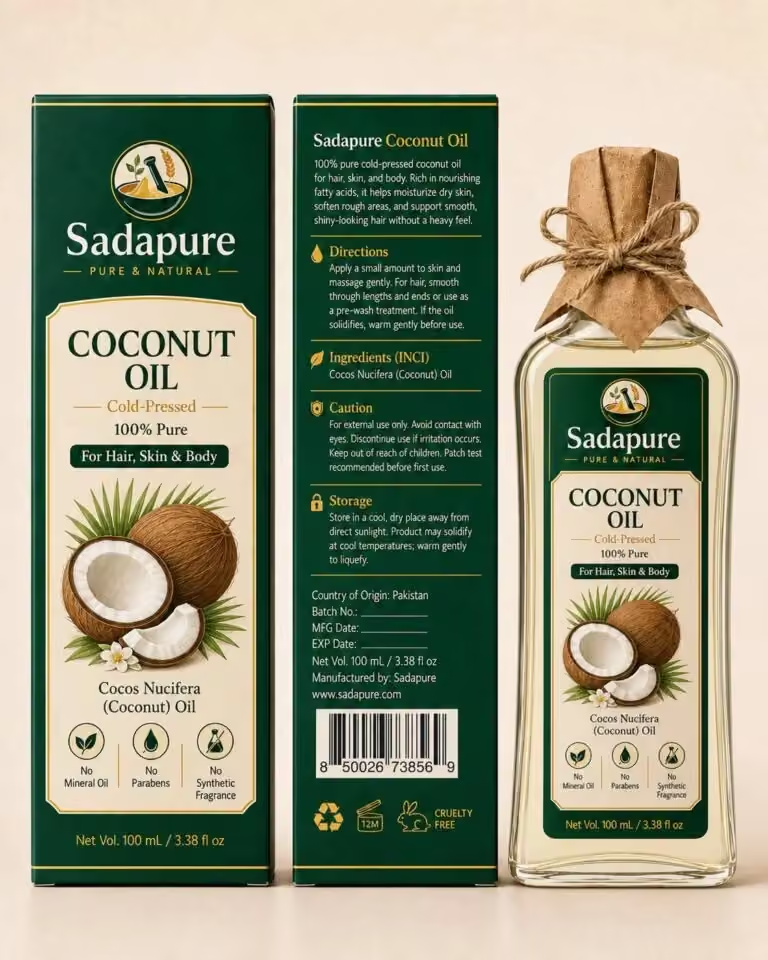
 | Cold-Pressed Pick SadaPure Cold-Pressed Coconut Oil Pressed without heat, with nothing else in the bottle. A light, easy-pour oil for pre-wash hair oiling, scalp massage and everyday skin care. ✓ No added perfume, colour or other oils From PKR 624 for 120 ml · PKR 1,300 for 250 ml |
Virgin coconut oil is an unrefined oil extracted from the fresh, mature white kernel of the coconut using mechanical or natural methods, with no chemical refining, bleaching, or deodorizing. On skin, it works best as a moisturizer that locks in water for dry skin. On hair, it is one of the few plant oils shown in laboratory studies to enter the hair shaft and reduce protein loss when applied before washing. It is not a good match for acne-prone facial skin.
Updated 17 October 2026. This guide explains what "virgin" and "cold-pressed" really mean on a label, what published research says about coconut oil on skin and hair, how to use it, and how to judge and store it through Pakistan's hot summers and cool winters.
Quick answers
- Best use on skin: dry shins, arms, elbows, heels, hands and lips, applied to slightly damp skin after a bath.
- Best use on hair: a pre-wash treatment applied to the lengths and ends, left on for at least 30 minutes, then shampooed out.
- Who should be careful: people with oily or acne-prone skin should keep it off the face, chest, and back.
- Why cold-pressed matters: oil pressed without high heat or solvents keeps its natural aroma and more of its minor plant compounds than refined oil made from dried copra.
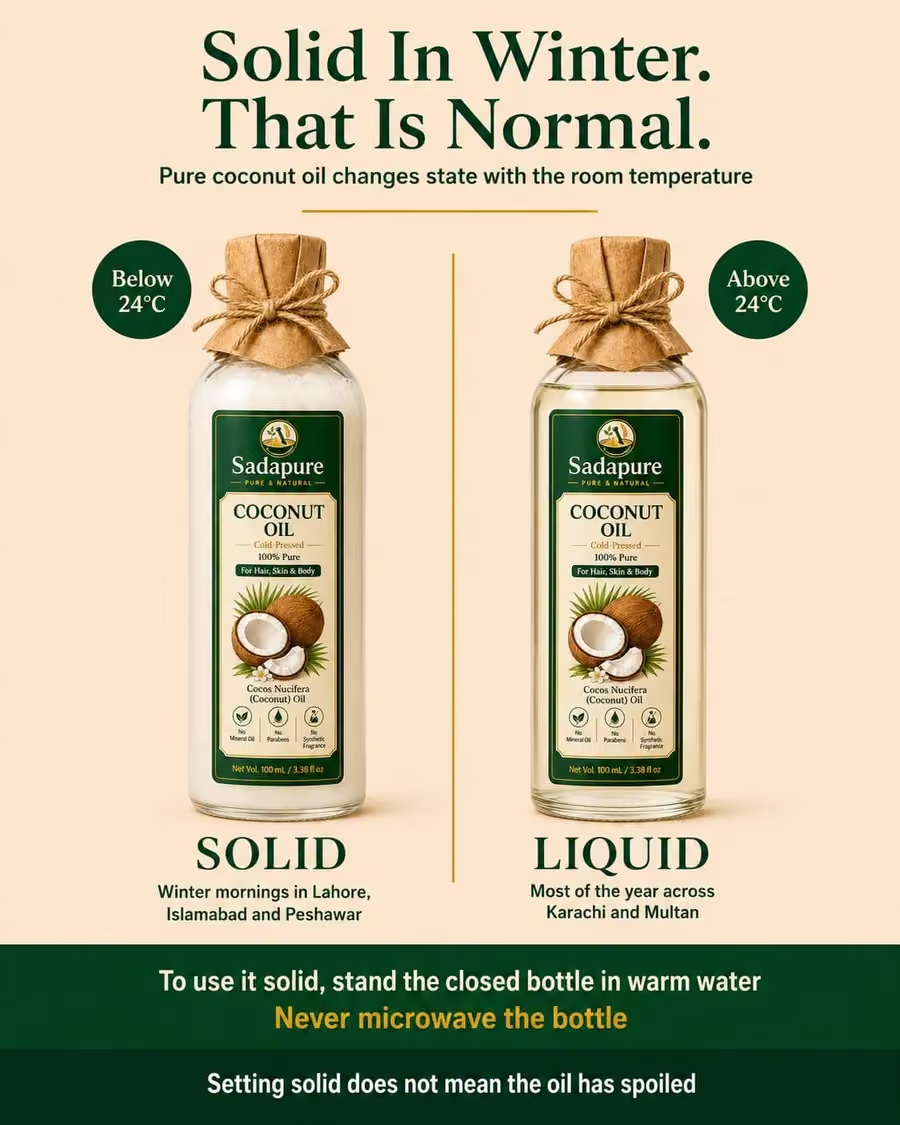
- Turning white in winter is normal: coconut oil melts at roughly 24–26 °C, so it sets on cool days and turns liquid in warm weather.
What is virgin coconut oil?
Coconut industry standards define virgin coconut oil (VCO) as oil obtained from the fresh, mature coconut kernel by mechanical or natural means, without chemical refining, bleaching, or deodorizing. The Asian and Pacific Coconut Community (APCC) standard specifies kernels about 12 months after pollination and describes good VCO as colorless, free of sediment, and carrying a natural, fresh coconut scent.
The kernel is the firm white "meat" lining the inside of the shell. It is not the coconut water, a mix-up that appears in many online articles.
Producers make VCO in two main ways:
- Fresh-dry method: the fresh kernel is grated, dried at a low temperature, and pressed in an expeller.
- Wet method: the fresh kernel is pressed into coconut milk, and the oil is then separated from the milk by fermentation, chilling, and centrifugation.
Virgin, cold-pressed and refined: what the labels mean
"Virgin" and "cold-pressed" overlap, but they are not the same thing. In the Codex wording for vegetable oils, cold-pressed oils are made by mechanical means only, without heat, while virgin oils may involve some heat, provided the oil itself is not altered. Refined coconut oil is different again. It is usually pressed from copra (sun- or kiln-dried kernels) and then refined, bleached, and deodorized, a process often abbreviated as RBD.
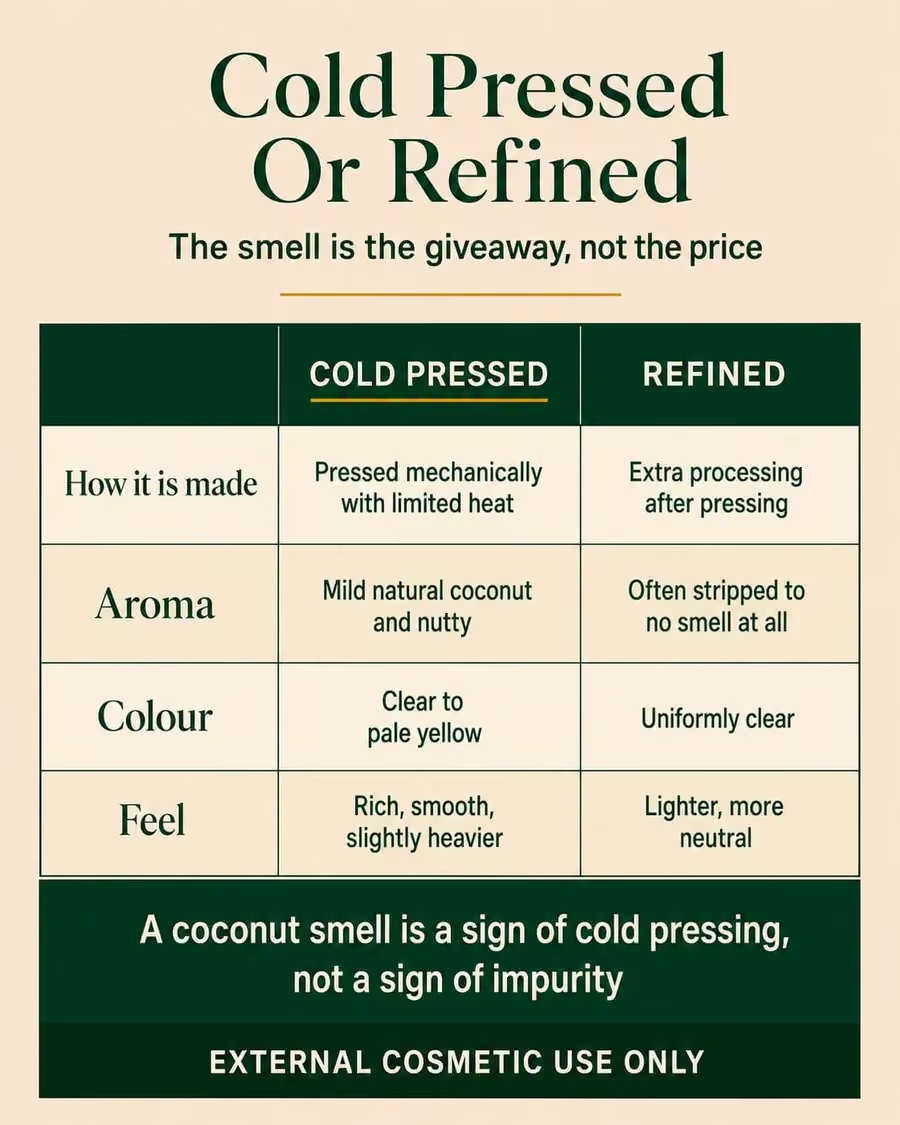
| Feature | Virgin or cold-pressed | Refined (RBD) |
|---|---|---|
| Raw material | Fresh, mature coconut kernel | Mostly copra (dried kernel) |
| Processing | Pressing, or separating oil from coconut milk; no chemical refining | Pressing or solvent extraction, followed by refining, bleaching, and deodorizing |
| Aroma | Mild, fresh coconut scent | Little or no scent |
| Appearance | Clear when liquid, white when set | Clear to pale yellow when liquid, white when set |
| Minor compounds | Retains more natural polyphenols | Many minor compounds are reduced during refining |
| Common uses | Hair and skin care; food-grade versions for cooking | Frying, baking, soap making and cosmetic manufacturing |
What gives coconut oil its skin and hair benefits?
Coconut oil is unusual among plant oils because most of its fats are saturated and medium-chain. Lauric acid alone makes up roughly 45–52% of its fatty acids, followed by myristic acid (about 16–18%) and caprylic and capric acids (about 8–10% combined). Virgin oil also carries small amounts of polyphenols and vitamin E compounds.
This make-up explains three things you will notice at home:
- It keeps well. Saturated fats resist oxidation far better than the unsaturated fats found in sunflower or almond oil, so coconut oil is slow to go rancid.
- It sets below about 24 °C. That is why a bottle that pours freely in a Lahore June can be firm and white by December.
- It can enter hair fibers. Lauric acid triglycerides are small, straight, and attracted to hair protein, which helps the oil move past the outer cuticle.
Benefits of virgin coconut oil for skin
1. It seals moisture into dry skin
Coconut oil acts as both an emollient and an occlusive: it softens rough skin and leaves a thin layer that slows water loss from the surface. In a 2004 double-blind trial of 34 people with mild to moderate dry skin on the legs, extra virgin coconut oil applied twice a day for two weeks worked as well as, and as safely as, mineral oil, with a slight trend in its favor. A 2018 trial found that coconut, jojoba and almond oils all raised skin hydration over two weeks and performed on par with white petrolatum.
In everyday terms, it is a simple, effective moisturizer for the areas that dry out first in winter and in air-conditioned rooms: shins, forearms, elbows, knees, heels and hands.
2. It has been studied on sensitive, dry skin
In a 2014 randomized trial of 117 children with mild to moderate atopic dermatitis, twice-daily virgin coconut oil for eight weeks improved skin scores in 93% of the children, compared with 53% of those using mineral oil. Laboratory work published in 2019 also found that VCO did not irritate reconstructed human skin and increased proteins linked to a healthy skin barrier.
These findings describe research settings. If you are managing eczema or another skin condition, keep following your doctor's plan and use oil as part of daily moisture care.
3. It loosens makeup and sunscreen
Because oil dissolves oil, a small amount of coconut oil can break down long-wear foundation, waterproof mascara, and sunscreen. Massage it in gently, wipe with a warm, damp cloth, and then use your regular face wash to ensure no greasy film remains.
Should you put coconut oil on your face?
Only if your skin is dry and rarely breaks out. Coconut oil is usually given a comedogenic score of 4 on a 0–5 scale, indicating a high likelihood of clogging pores. Dermatologists at Cleveland Clinic advise against using it on the face if you are prone to acne and suggest keeping it off the chest, shoulders, and back as well. In some people, it can also trigger milia, the tiny white bumps that form when pores are blocked.
Comedogenic scores come from older test methods, and individual skin varies, so some people with dry skin use coconut oil without trouble. If you want a facial oil that is less likely to clog pores, jojoba oil is a popular choice. Our guide to carrier oils for skin, face and massage compares the main options side by side.
Benefits of virgin coconut oil for hair
The research on coconut oil and hair is stronger than most hair-oil claims you will read online. In a 2003 study in the Journal of Cosmetic Science, coconut oil was the only of three oils tested, alongside sunflower and mineral oil, that markedly reduced protein loss from both damaged and undamaged hair, whether applied before or after washing. An earlier study using mass spectrometry showed that coconut oil penetrates the hair cortex, whereas mineral oil does not, and that hair treated with coconut oil swelled noticeably less in water.
That matters because hair swells every time it gets wet and shrinks as it dries. Repeated swelling, along with rough towel-drying and combing, slowly chips away at the cuticle, leading to frizz, rough ends, and breakage.
What coconut oil does well
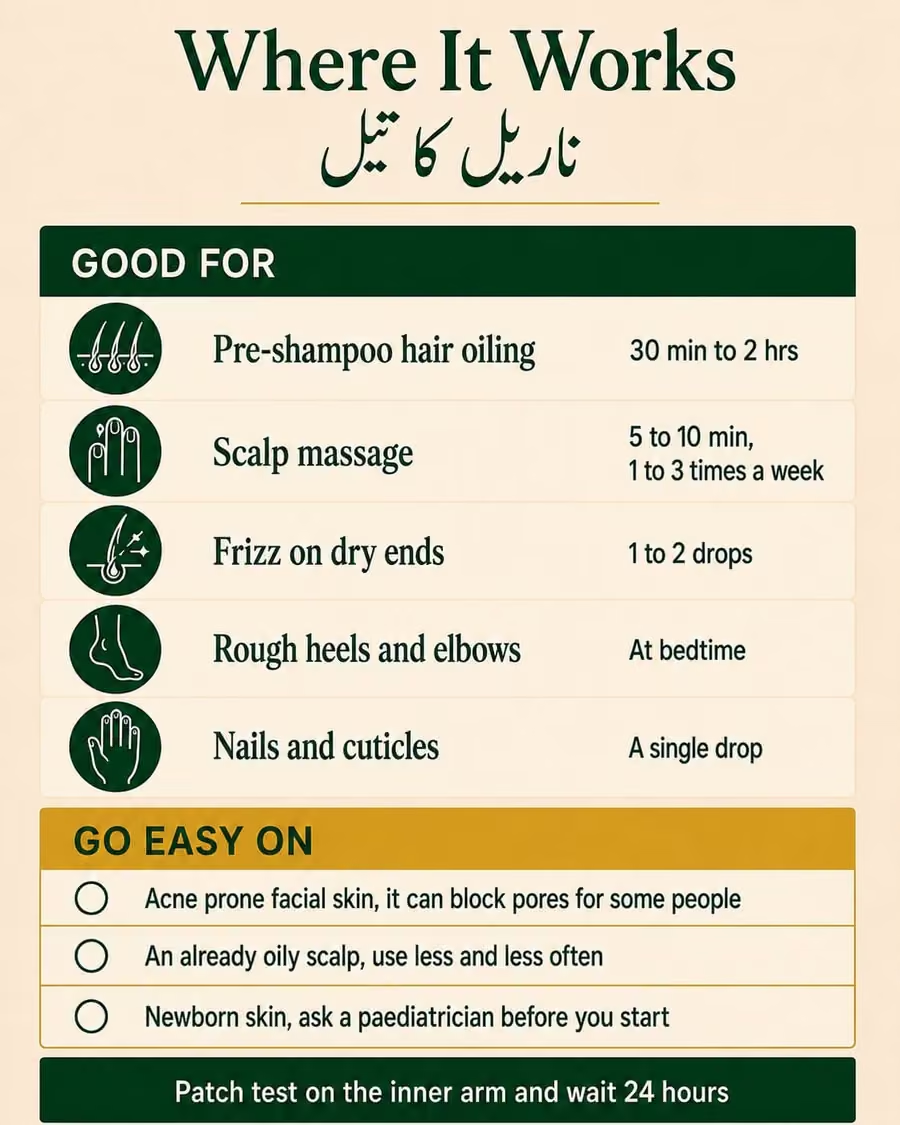
- Protects hair during washing: a pre-wash coat limits how much water the strands absorb, reducing protein loss.
- Makes combing easier: softer, smoother lengths tangle less, which means fewer snapped strands.
- Calms frizz on dry ends: one or two drops smooth flyaways between washes.
- Loosens dry flakes: massaging oil into a dry scalp before washing helps shampoo lift flakes away.
What coconut oil cannot do for hair?
No reliable evidence shows that coconut oil makes hair grow faster or thicker, or that it stops hair fall caused by genetics, hormones, illness,s or low iron. It also cannot rejoin a split end; the only fix for an existing split is a trim. Its real value lies in preventing new damage. If hair fall or an itchy, scaly scalp continues, see a dermatologist. For a wider look at oils used in hair routines, read our guide to the best oils for hair.
| SadaPure Coconut Oil: Pack Sizes Choose the size that fits your routine 120 ml suits a first trial, travel and hand or lip care. 250 ml covers regular pre-wash hair oiling for one person. 500 ml is for body moisturising and shared household use. ✓ 120 ml at PKR 624 Free delivery on orders of PKR 4,000 or more |
Prices include all taxes. See SadaPure Coconut Oil and choose your size; free delivery applies on orders of PKR 4,000 or more.
How to use virgin coconut oil: simple routines
Pre-wash hair treatment (once or twice a week)
- If the oil has set, stand the closed bottle in a bowl of warm water for a few minutes.
- Use about 1–2 teaspoons for short hair, 1 tablespoon for shoulder-length hair, and up to 2 tablespoons for long or very thick hair.
- Work it into the mid-lengths and ends first. If your scalp is dry, massage any leftover oil into it for 5–10 minutes.
- Leave it on for 30 minutes to 2 hours. For very dry or curly hair, keep it on overnight under a cotton scarf.
- Shampoo, rinse, and shampoo again if the hair still feels heavy. Finish with conditioner on the ends.
Fine or oily hair does better with oil on the ends only, washed out the same day.
Body moisturizer after a bath
Pat your skin until it is slightly damp, warm a few drops between your palms and press the oil into dry areas. Damp skin spreads the oil further and holds on to the water already there. Give it a few minutes to settle before you dress.
Lips, cuticles, heels and elbows
At bedtime, rub a tiny amount into chapped lips, dry cuticles and rough heels. For cracked heels, apply the oil and pull on cotton socks before sleeping.
Patch test first
Before regular use, apply a small amount of oil to the inner forearm and wait 24 hours. Stop if you see redness, itching, or bumps. Anyone with a known coconut allergy should avoid it.
How to check coconut oil quality
No home test can prove that an oil is 100% pure, but these checks help you spot a poor product:
- Smell: expect a mild, fresh coconut aroma. A sour or crayon-like smell means the oil has turned rancid, and a strong roasted note suggests high-heat processing.
- Clarity: liquid oil should be clear, with no cloudiness, floating bits,s or sediment at the bottom
- Color when set: it should turn evenly white, not grey or brownish.
- Fridge check: pure coconut oil sets right through when chilled. A layer that remains runny can indicate that another oil has been mixed in. Setting solid, however, does not prove purity on its own.
- Label: look for a single ingredient (coconut oil), the processing method, the intended use (cosmetic or food grade), a batch or expiry date, and a seller you can actually contact.
How to store coconut oil in Pakistan's climate
- Keep the cap tightly closed and the bottle away from direct sun, the stove,e and hot car dashboards.
- Pour from the bottle rather than dipping wet fingers into it, since water and dirt shorten an oil's life.
- In winter, melt set oil by standing the closed bottle in warm, not boiling, water. Never microwave the bottle or place it over a flame.
- Switching between solid and liquid with the seasons does not harm the oil.
- Use it before the date on the label, and discard it if it smells sour.
Common myths about coconut oil
| Myth | What the evidence says |
|---|---|
| "Coconut oil grows hair." | It protects hair from damage, but it has not been shown to increase hair growth. |
| "It clears acne for everyone." | It is highly comedogenic and can make breakouts worse on the face and body. |
| "If it sets solid, it must be pure." | All coconut oil sets below about 24 °C, including blends that are mostly coconut oil. |
| "It works as a sunscreen." | It has no tested SPF. Use a broad-spectrum sunscreen outdoors. |
| "Virgin and refined oils are identical." | Refining strips the aroma and reduces many minor plant compounds. |
SadaPure Cold-Pressed Coconut Oil
SadaPure Coconut Oil (ناریل کا تیل) is cold-pressed: the coconut flesh is pressed without heat to keep its natural aroma and light color. Nothing else goes into the bottle, with no added perfume, color, or other oils. It comes in an easy-pour bottle with a tight cap that helps prevent leaks, in 120 ml, 250 ml, and 500 ml sizes.
This oil is sold for hair and skin care, not for cooking. Every order is packed in Lahore and delivered anywhere in Pakistan with Cash on Delivery. You can also explore our full range of cold-pressed oils.
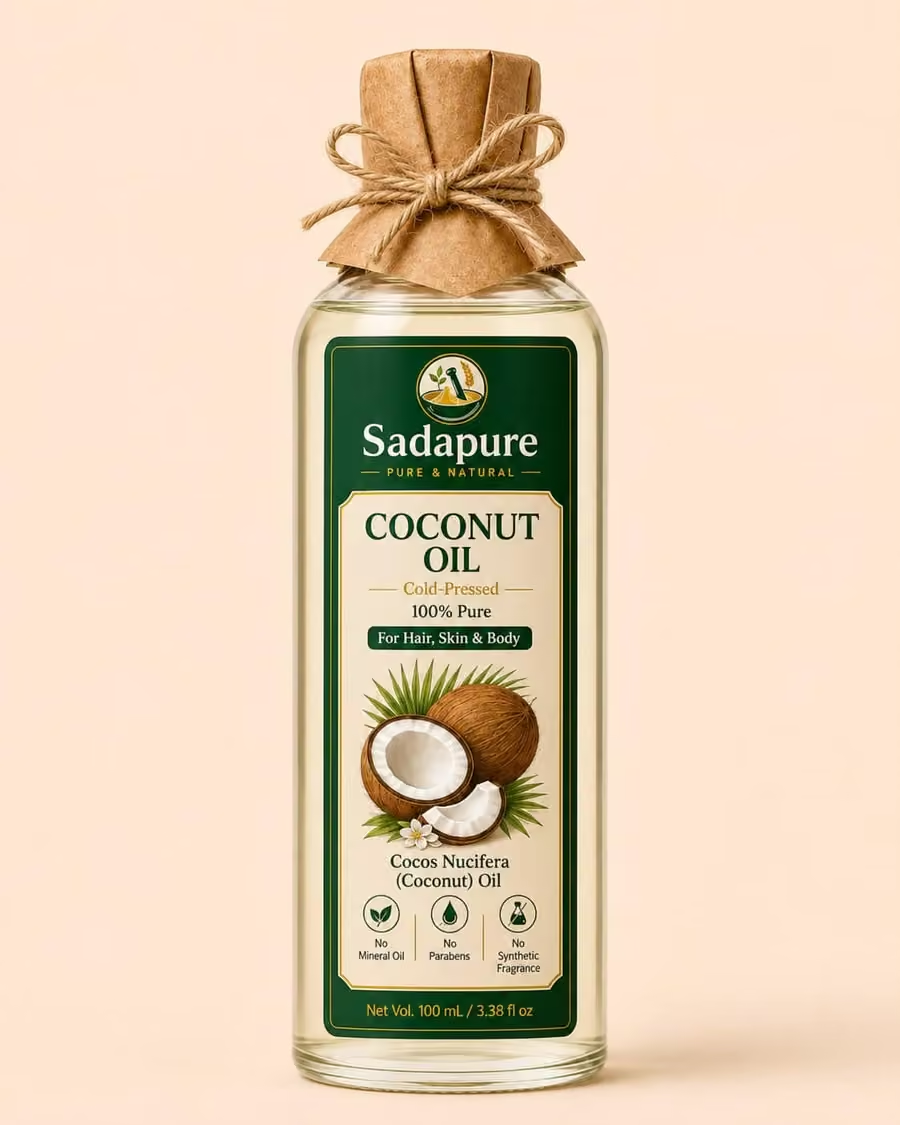
- Product: Coconut Oil, Cold-Pressed for Hair & Skin
- Sizes: 120 ml, 250 ml, and 500 ml
- Ingredient: coconut oil only
- Use: external use on hair, scalp, and body
- Payment and delivery: Cash on Delivery across Pakistan
Order SadaPure Coconut Oil or browse hair oils for other options.
Frequently asked questions about virgin coconut oil
Is virgin coconut oil the same as cold-pressed coconut oil?
Not exactly. Both are unrefined. "Cold-pressed" describes the method: the oil is pressed mechanically without heat. "Virgin" describes a quality standard: oil from fresh, mature kernels that has not been chemically refined, and some virgin oils are made with mild heat. Many good oils meet both descriptions.
Can I leave coconut oil in my hair overnight?
Yes, for most hair types. Cover your pillow, then wash the oil out in the morning. If you have fine or oily hair, or a scalp that gets bumps easily, keep the oil on the lengths and limit it to a few hours.
How often should I oil my hair with coconut oil?
Once or twice a week suits most people. Very dry, curly,ly or chemically treated hair can benefit from a pre-wash coat before every wash.
Is coconut oil good for dry skin in winter?
Yes. It suits dry body skin well. Apply it to damp skin after a bath, and use a little on hands and heels at night.
Can I use coconut oil on my face if I have dry skin?
You can try it on a small area for a week. If you notice blocked pores, tiny white bumps, or breakouts, stop and switch to a lighter facial oil, such as jojoba oil.
Why did my coconut oil turn white and solid?
Coconut oil melts at about 24–26 °C, so it sets whenever the room is cooler than that. Stand the closed bottle in warm water to melt it. The quality is not affected.
Can I cook with SadaPure Coconut Oil?
No. SadaPure Coconut Oil is sold for hair and skin care only. If you need coconut oil for cooking, message us on WhatsApp to ask about food-grade options.
مختصر اردو رہنمائی
ورجن ناریل کا تیل تازہ اور پکے ہوئے ناریل کے سفید گودے سے کیمیکل ریفائننگ کے بغیر نکالا جاتا ہے۔ جلد کے لیے اسے نہانے کے بعد ہلکی نم جلد پر خشک بازوؤں، ٹانگوں، کہنیوں، ایڑیوں اور ہاتھوں پر لگائیں۔ بالوں کے لیے شیمپو سے پہلے اسے بالوں کی لمبائی اور سروں پر لگائیں، آدھے گھنٹے سے دو گھنٹے تک رہنے دیں اور پھر دھو لیں۔ جن لوگوں کی جلد پر دانے جلدی نکلتے ہیں وہ اسے چہرے، سینے اور کمر پر نہ لگائیں۔ سردیوں میں تیل کا سفید ہو کر جم جانا قدرتی بات ہے؛ بند بوتل کو چند منٹ نیم گرم پانی میں رکھیں تو یہ پھر سے پگھل جائے گا۔ سادہ پیور کا کولڈ پریسڈ ناریل کا تیل صرف بالوں اور جلد کے لیے ہے، کھانا پکانے کے لیے نہیں۔
| Ready to Try It? Bring home cold-pressed coconut oil If this guide has helped you decide, start with the 250 ml bottle for hair, or the 120 ml bottle if you want a small trial first. ✓ Single-ingredient, cold-pressed oil PKR 624 to 2,600 depending on size |